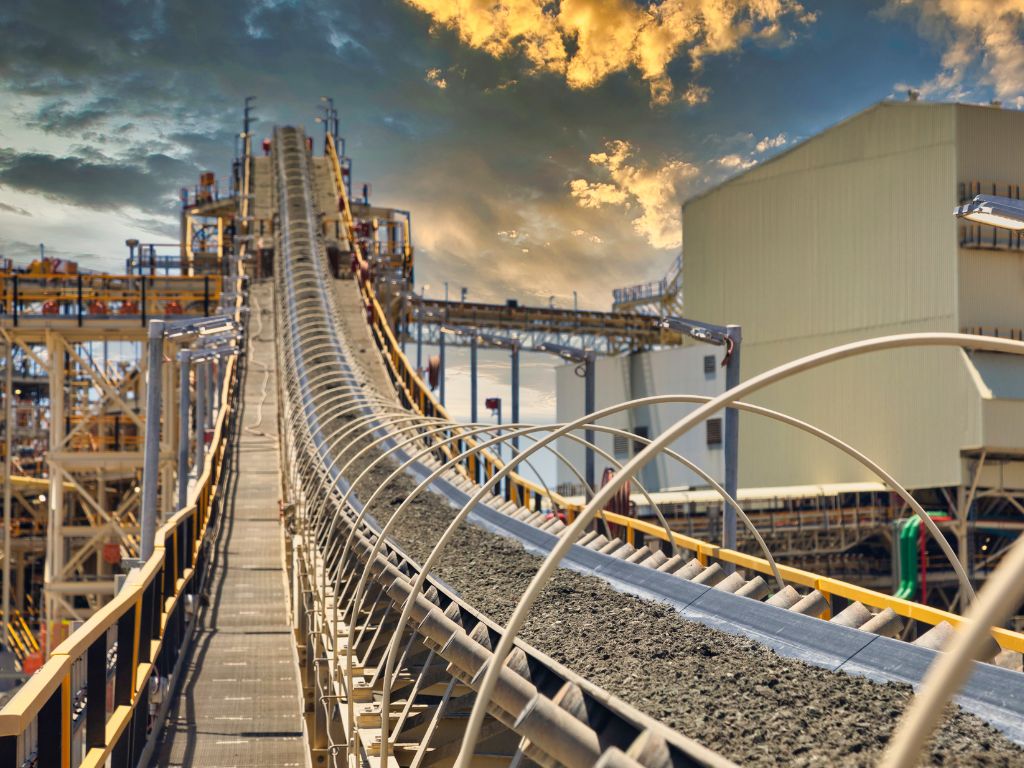
One of our clients operates two bauxite mines in Western Australia, feeding two alumina refineries. Multiple overland conveyors transport bauxite using steel cord belting across distances of several kilometres. Seven Belt Scanner MF systems have been installed across key conveyors to provide continuous electromagnetic condition monitoring of the steel cord carcass.
Steel cord conveyor belts in bauxite operations are subject to progressive cord degradation from moisture ingress, corrosion, and fatigue — particularly at vulcanised splices. Without continuous monitoring, cord damage can develop undetected until a splice failure or catastrophic belt break occurs. Manual inspection methods provide only a snapshot in time and cannot identify developing subsurface deterioration between inspections.
Beltscan installed seven Belt Scanner MF systems across priority conveyors at both operations. Each system uses permanent magnet conditioning heads positioned 35mm from the belt surface, with a sensor transducer scanning individual steel cords per pass. Disastrous Event Detection (DED) provides 24/7 automated belt stop capability when damage thresholds are violated. All systems are non-contact — requiring no modification to the belt.
The Belt Scanner MF fleet has been providing continuous belt condition data across both operations for over a decade. The systems deliver high-resolution cord-by-cord imaging that enables maintenance teams to track splice deterioration, identify broken cords, and schedule repairs during planned shutdowns rather than responding to failures. DED has remained armed and operational throughout, providing an additional layer of protection against catastrophic events.
Over ten years of operation, the seven scanners have supported a transition from reactive to condition-based belt management. Maintenance teams use scan data to trend cord condition over time, predict splice life, and make evidence-based decisions about belt replacement timing. The systems have operated reliably in the wet, forested conditions of Western Australia's south-west with low maintenance requirements — periodic washdown and visual inspection per the standard maintenance schedule.
- Seven Belt Scanner MF systems operating reliably for over a decade
- Continuous cord-by-cord condition data enables condition-based maintenance
- DED provides 24/7 automated protection against catastrophic events
- Non-contact electromagnetic technology — no belt modification required
- Supports long-term belt lifecycle trending and replacement planning
Our team can assess your operation and recommend the right Belt Guard solution.
Get a Quote