

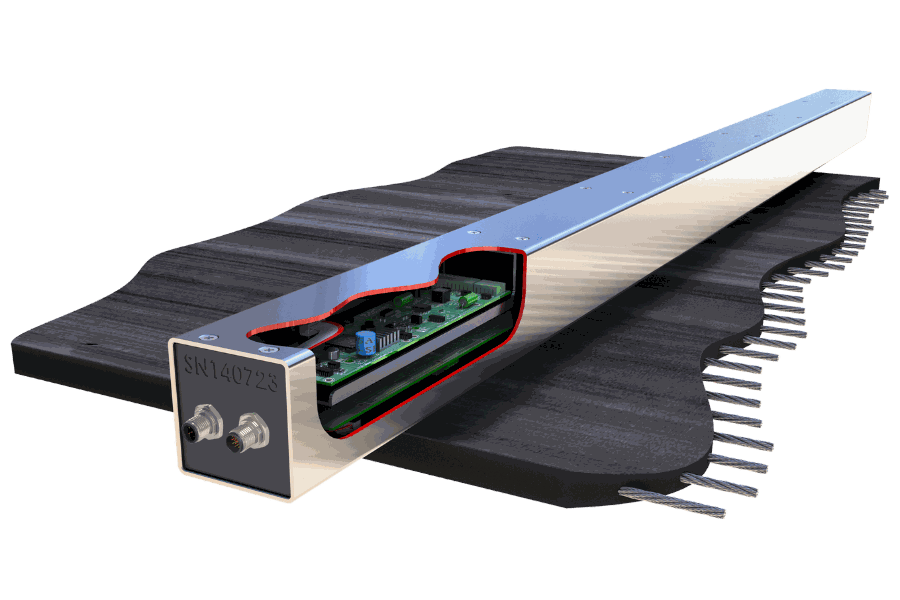
Why Belt Scanner MF Portable?
One system scans multiple conveyors — ideal for fleet-wide condition assessment.
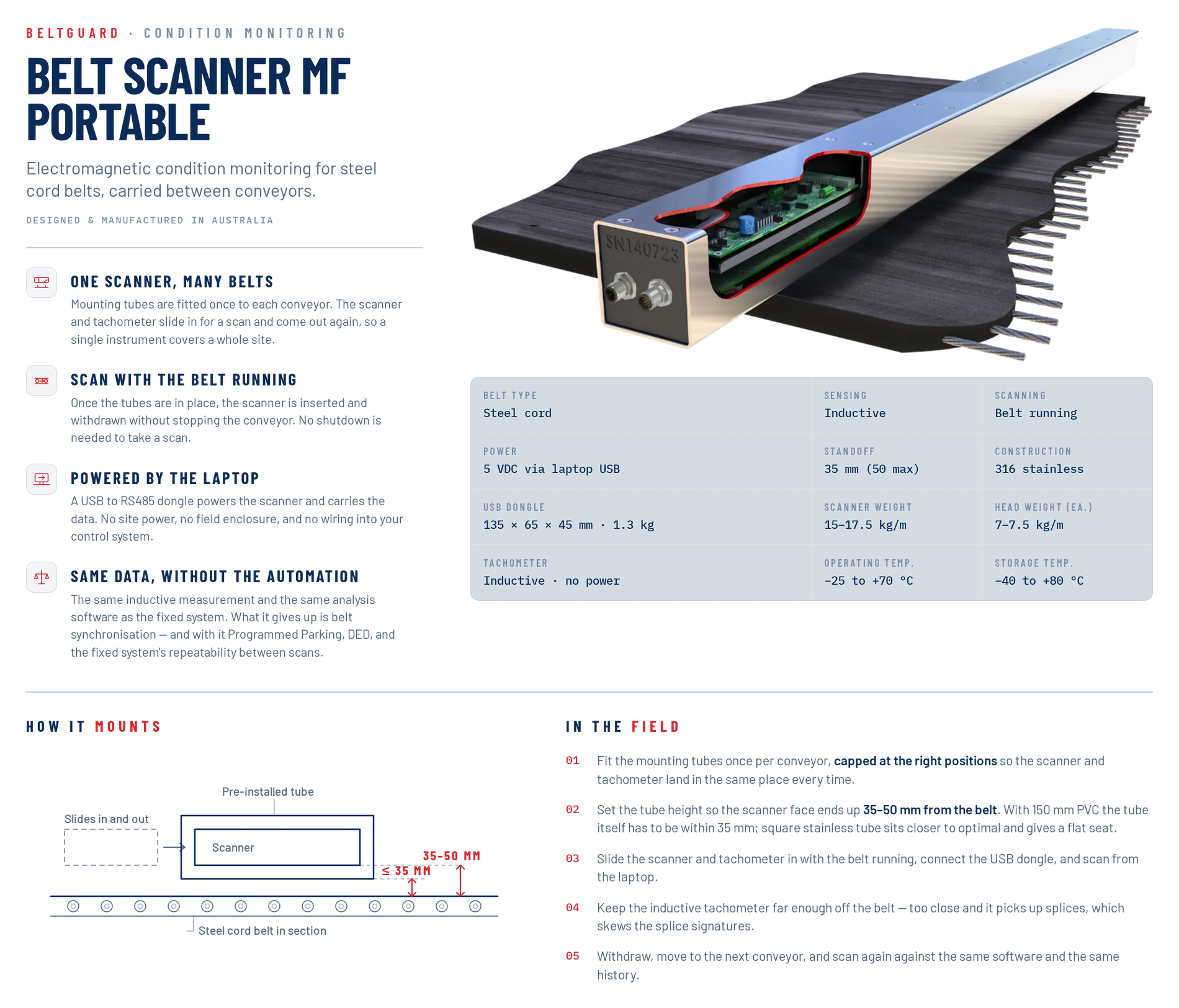
Tubes are fitted once; after that the scanner slides in and out with the belt running.
Powered entirely from a laptop via USB — no site power or control wiring.
Belt Scanner MF - Portable
Portable Condition Monitoring
The Belt Guard Belt Scanner MF - Portable brings the same electromagnetic condition monitoring as the fixed system to sites with several steel cord conveyors. Mounting tubes are fitted once to each conveyor; the scanner, conditioning heads and tachometer slide in for a scan and come out again, so one instrument covers a whole site. Scanning is done with the belt running and the scanner is powered from a laptop through a USB dongle, so no site power, field enclosure or control wiring is needed. Belt synchronisation, and with it Programmed Parking and Disastrous Event Detection, are fixed-system features.
The portable system is configured around your belt width, the number of conveyors to be prepared and the mounting arrangement required at each conveyor.
Supplied directly by Beltscan Systems or through authorised regional partners.
Is Belt Scanner MF Portable Right for You?
- Operate more than one steel cord conveyor
- Find periodic scanning sufficient for your risk profile
- Want one instrument that covers a whole site
- Want the same high-resolution scan data as the fixed system
- Prefer a lower entry cost per conveyor covered
- Have one conveyor critical enough to warrant permanent monitoring
- Need continuous rather than periodic scanning
- Need PLC integration, automated belt stop or Programmed Parking
- Want alarms raised without someone attending the belt
What Belt Scanner MF Portable Detects
- Broken and deteriorating steel cords
- Change in cord condition over successive scans
- Splice deterioration and broken lacing wires
- Corrosion within the cords
- Developing carcass anomalies around the cords
- Position and severity of detected events along the belt
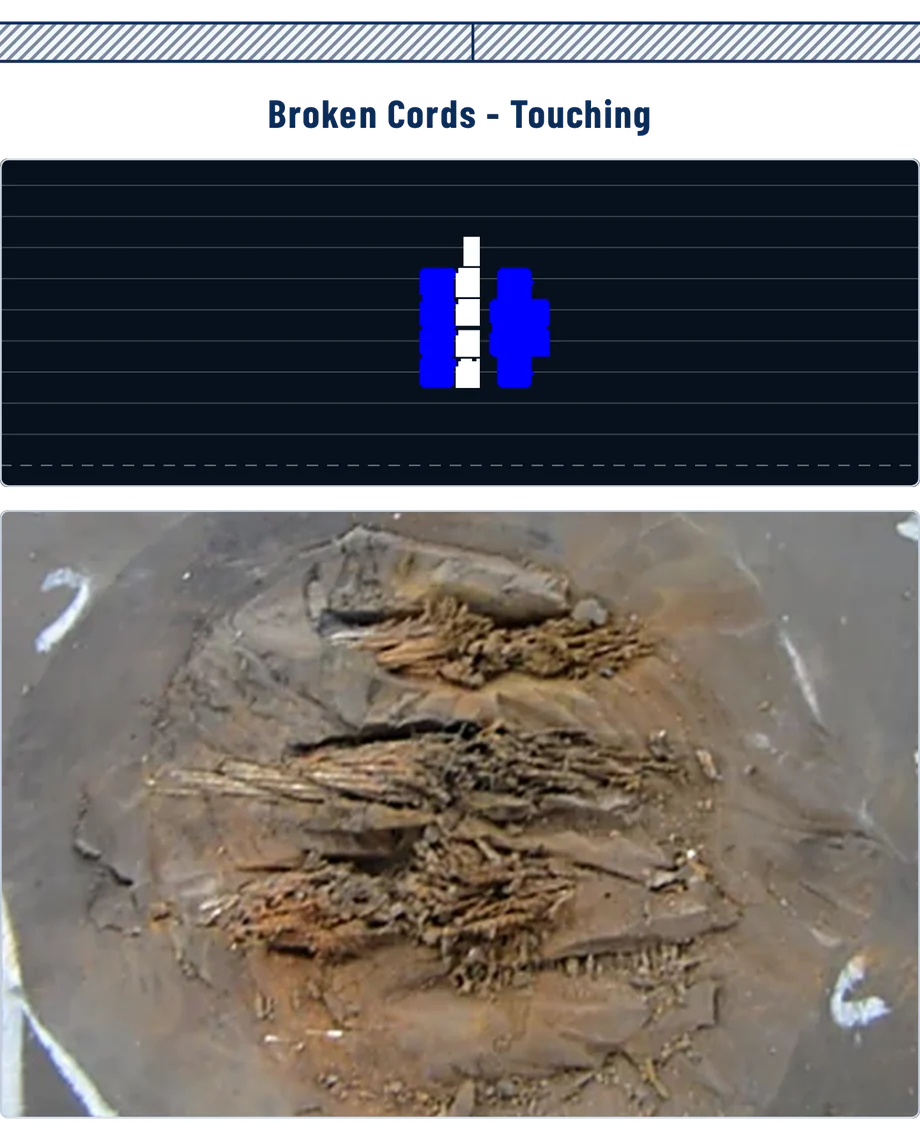
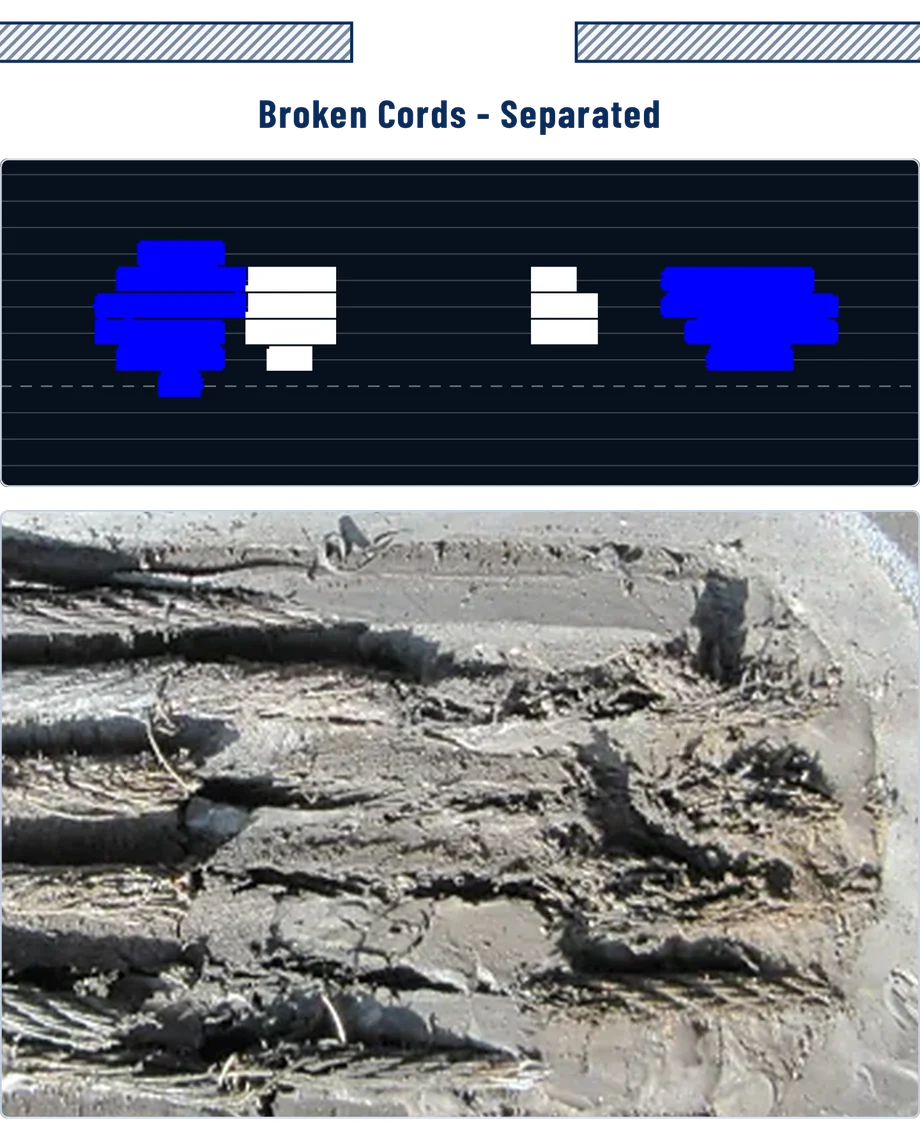
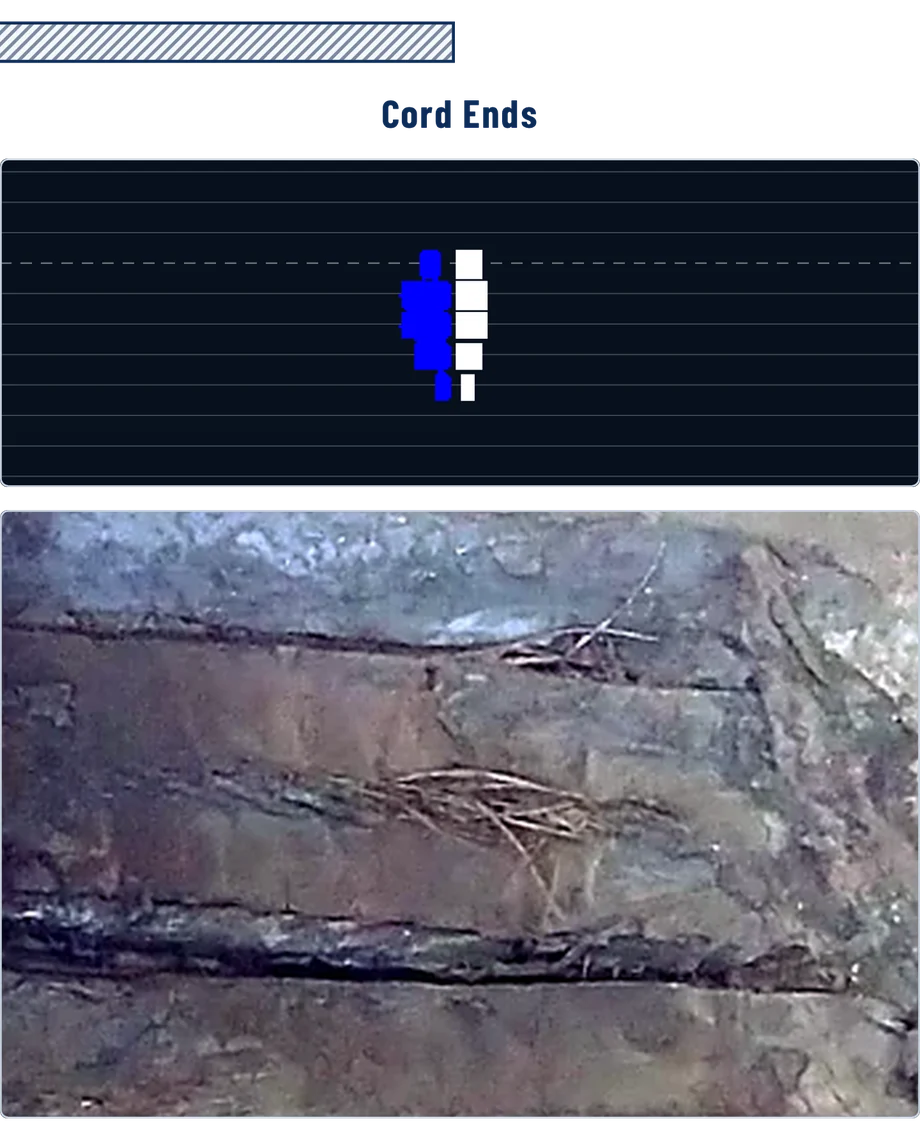
How Belt Scanner MF Portable Works
Each conveyor you intend to scan is prepared once. After that the instrument travels: it slides into the prepared positions, scans with the belt running, and comes back out.
Prepare Each Conveyor
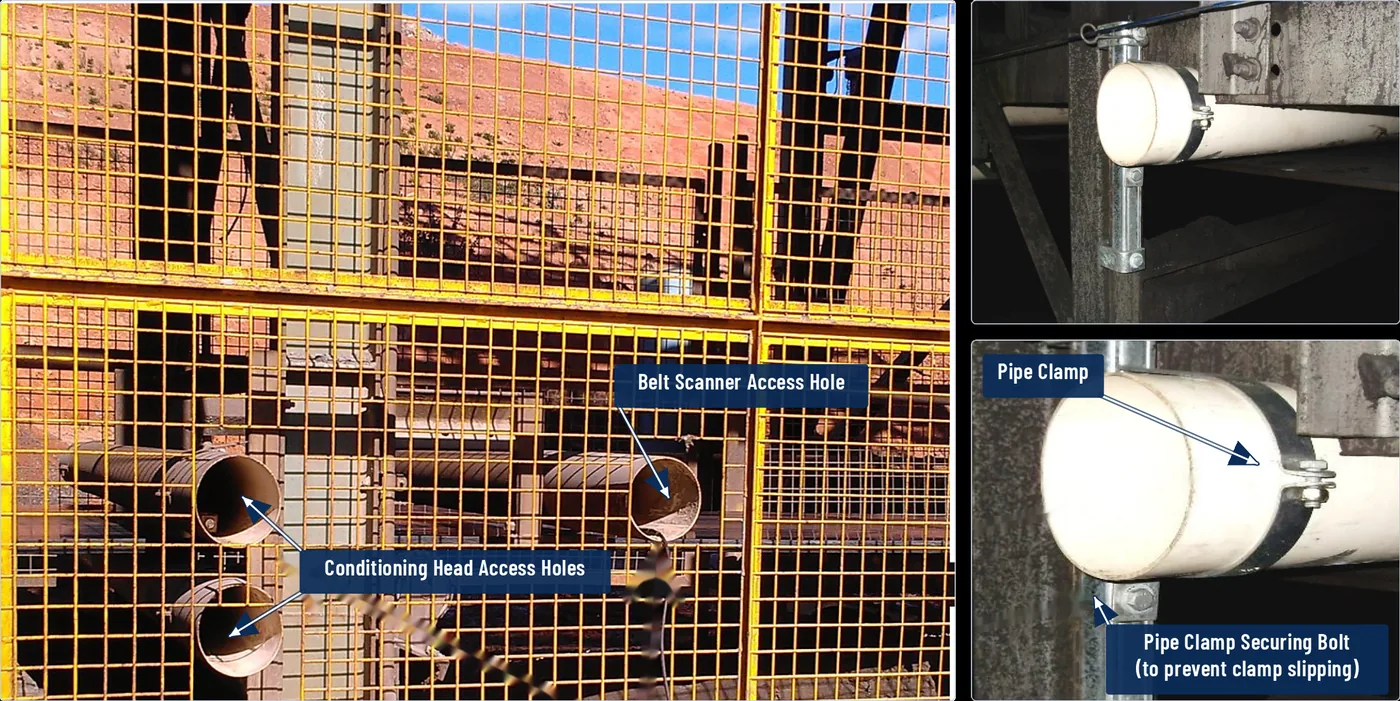
Permanent full-width mounting tubes are installed across each conveyor that will be monitored.
These positions allow the portable magnet bars and scanner to be repeatedly installed in the correct operating positions. The prepared structure remains in place permanently.
Install the Portable Hardware
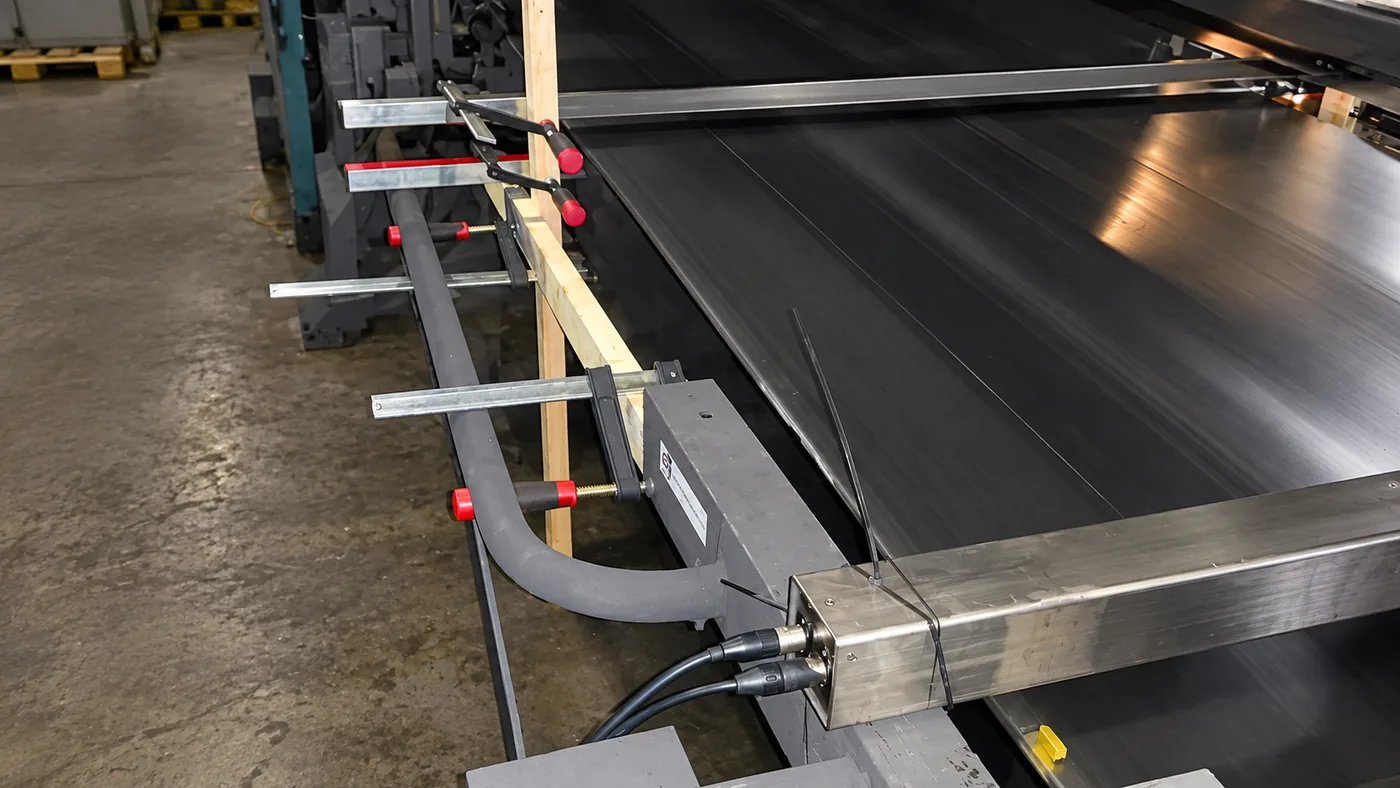
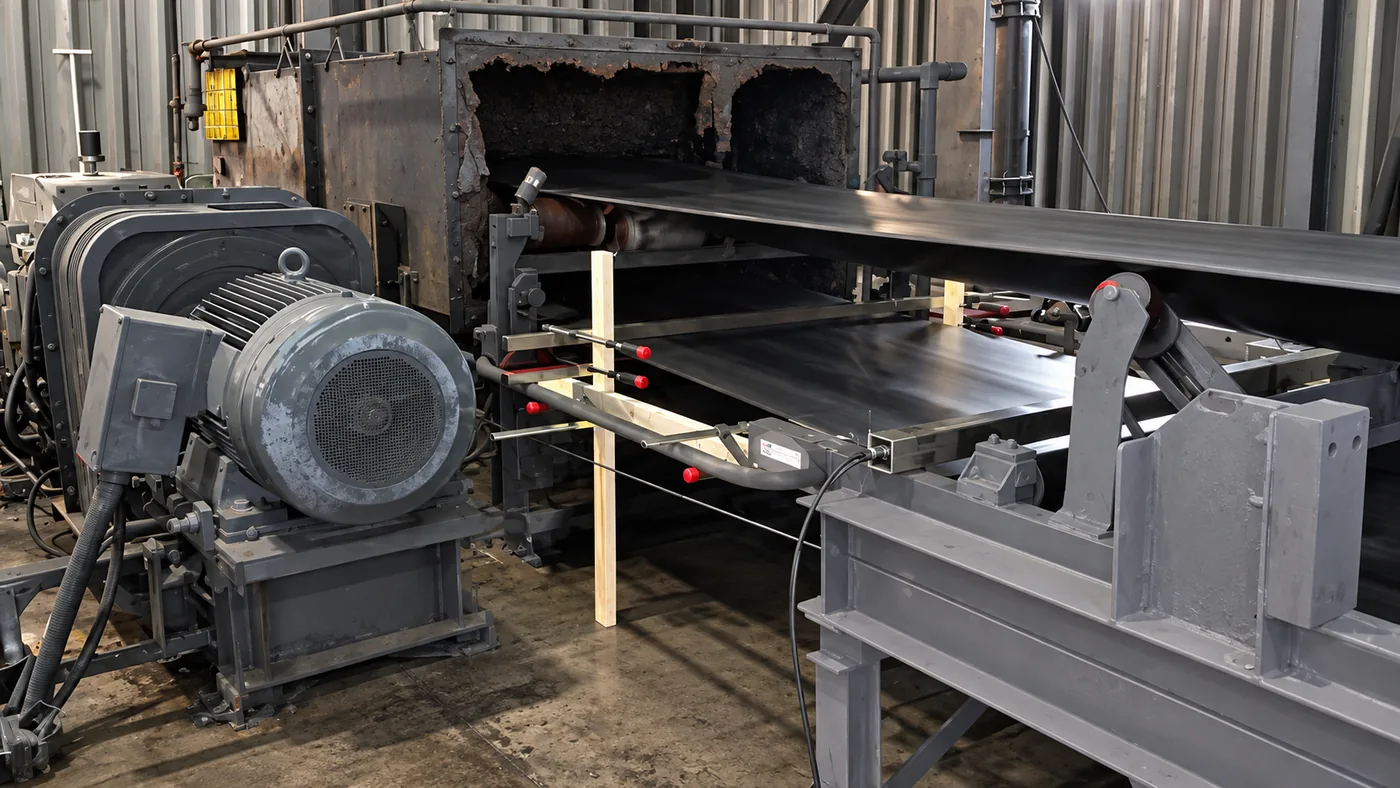
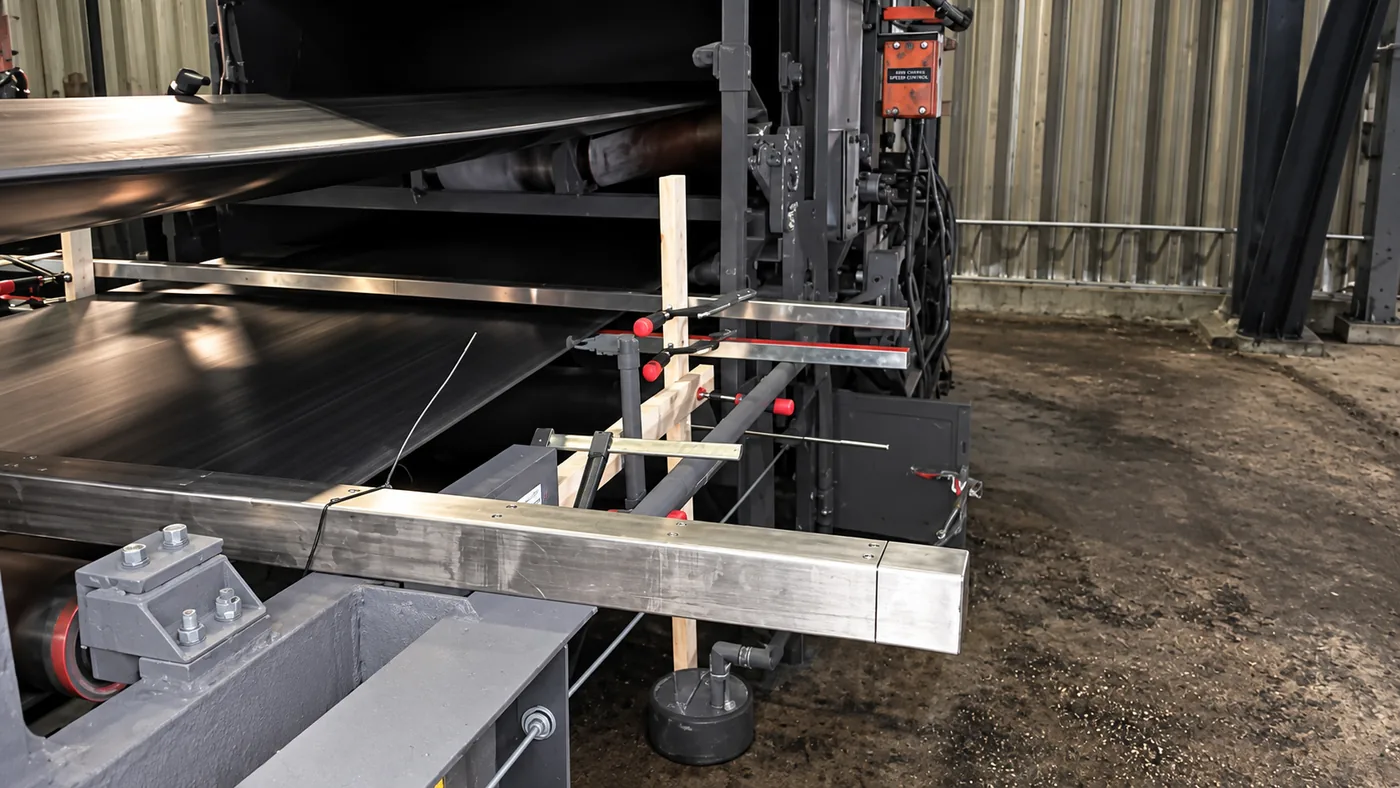
The portable components slide into the permanent mounting tubes:
- an upper magnetic conditioning bar
- a lower magnetic conditioning bar
- the Belt Scanner inductive scanner
Scan the Belt
As the conveyor operates, the upper and lower magnet bars magnetise the steel cords. The belt then passes the downstream non-contact inductive scanner.
The scanner captures the magnetic signature across the belt. Data is collected and analysed to identify changes in cord condition.
Move to the Next Conveyor
Once the scan is complete, the portable hardware is removed from the prepared mounting tubes.
The same scanner can then be transferred to another conveyor already fitted with the permanent mounting arrangement.
- 3 × full-width mounting tube assemblies
- Prepared upper magnetic conditioning position
- Prepared lower magnetic conditioning position
- Prepared scanner position
- Nothing is embedded, bonded or cut into the belt
Installed once during a planned conveyor shutdown and left in position for future surveys. Where the conveyor doesn’t already have one, a tachometer probe is fitted at the same time.
- 2 × magnetic conditioning bars
- Belt Scanner MF inductive scanner
- Tachometer
- Laptop and USB–RS485 interface
Installed into the prepared positions, used to scan the running belt, then moved to the next prepared conveyor.
Prepare each conveyor once. One scanner system can then be moved between all prepared conveyors.
Setup at a Glance
| Fitted by | Site personnel following supplied documentation, with remote Beltscan support. |
| Initial conveyor shutdown | Required once to install the mounting infrastructure. |
| Shutdown during scanning | No. Routine scanning is completed with the belt running. |
| Belt modification | None. Nothing is embedded, bonded or cut into the belt. |
| Site power | Not required. The scanner is powered from the laptop via the USB–RS485 interface. |
| Laptop | Required. Data acquisition and analysis software is supplied. |
| PLC / control connection | None required. |
| Internet | Not required to perform a scan. Required for portal access and remote reporting. |
| Commissioning | Typically 1 day including operator training. |
Detailed mounting dimensions, tube selection, scanner clearances and tachometer positioning are provided in the installation documentation.
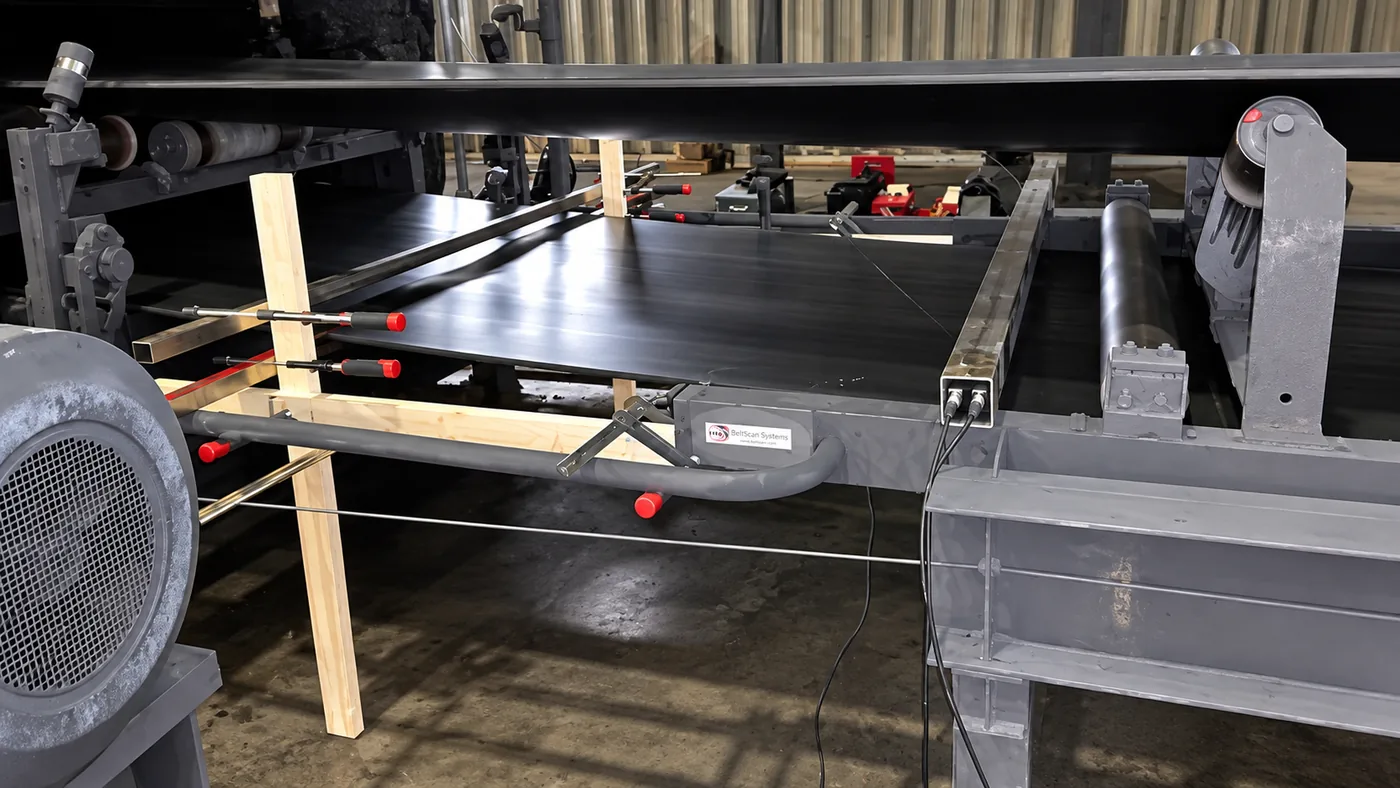
Portable Example Setups
The scanner and conditioning heads are held at the correct standoff by whatever suits the conveyor — permanent mounting tubes on a regularly scanned belt, or a temporary arrangement for a one-off survey.
System Supply & What’s Included
- Belt Scanner MF full-width scanner
- 2 × magnetic conditioning heads
- USB–RS485 interface
- Tachometer probe and target magnet
- Belt Scanner data acquisition and analysis software
- Installation and operating documentation
- First-year software licence
The annual renewal covers the complete Belt Scanner MF software and reporting suite.
- System access and configuration
- Offline analysis
- Data download
- Online reporting
- Portal access
Per conveyor preparation. Each conveyor to be routinely scanned requires its own prepared mounting arrangement. The portable scanner, conditioning heads and interface equipment then move between prepared conveyors.
Each portable project is quoted according to the scanner width, number of conveyors to be prepared, mounting requirements, destination and support requirements. Projects are supplied directly by Beltscan Systems or through authorised regional partners.
Also in Belt Guard Range
Permanently installed electromagnetic condition monitoring for steel cord belts, with optional automatic belt stop.
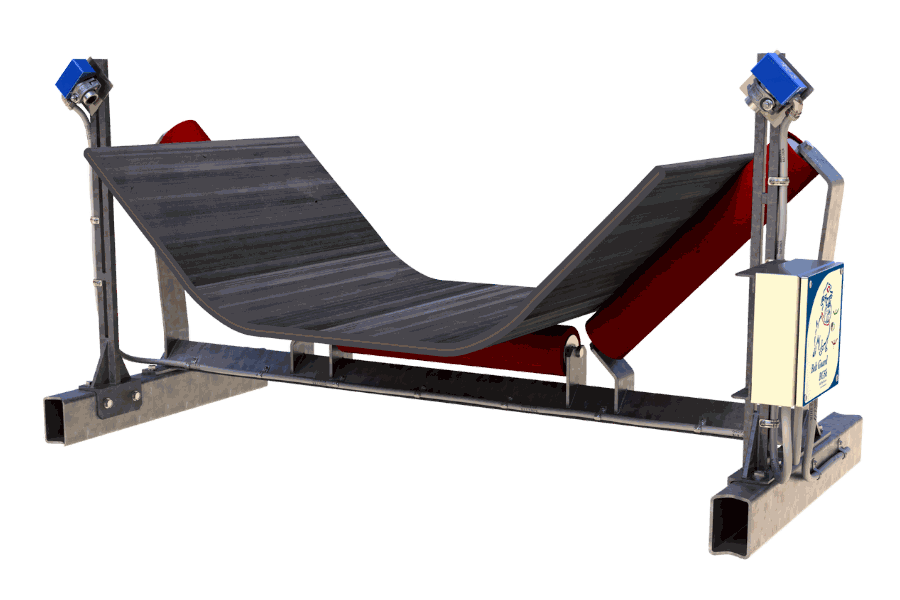
Longitudinal rip detection for fabric, PVC and steel cord belts, from continuous belt width monitoring.
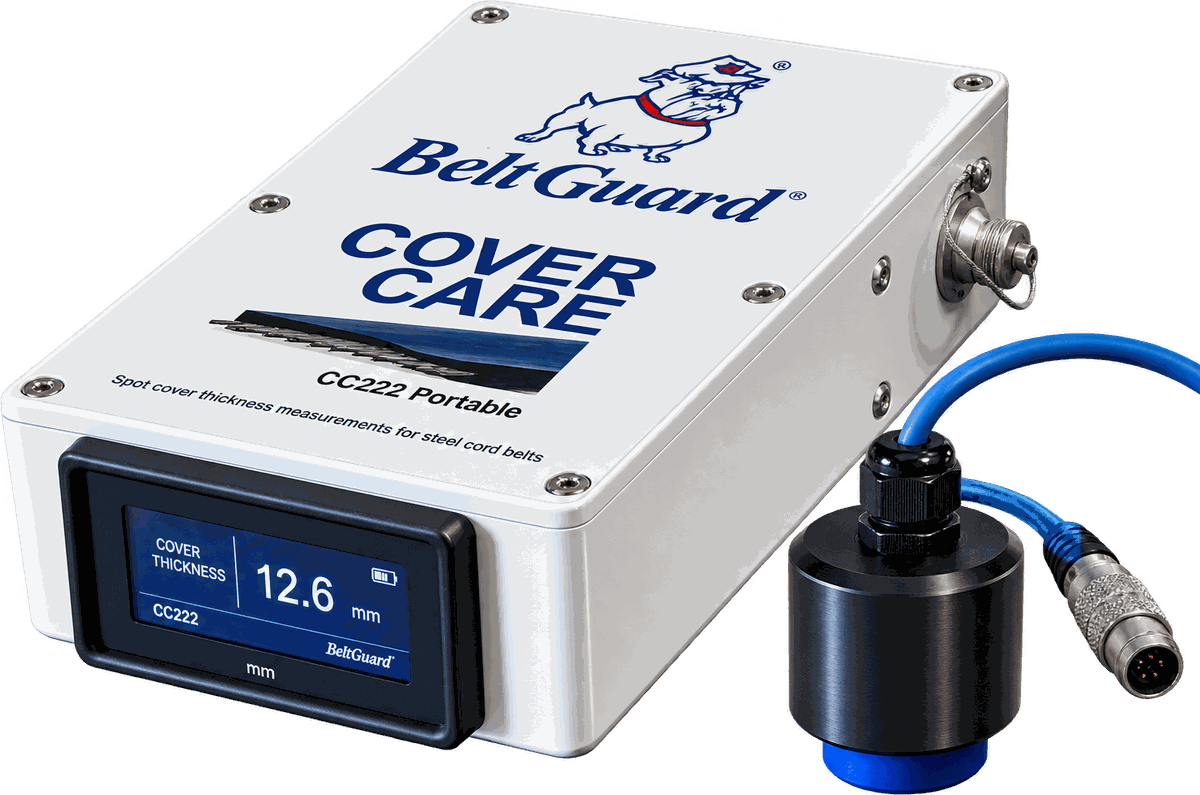
Handheld contact instrument for measuring remaining belt cover thickness. No coupling medium required.
Technical Resources & Downloads
System Overview
Configure a Portable System for Your Site
Tell us your belt width, how many conveyors you want to prepare and where the system will be used. We’ll recommend the portable scanner configuration and mounting requirements for each conveyor. Mounting infrastructure is configured per conveyor, while the portable scanning hardware is shared between prepared conveyors.