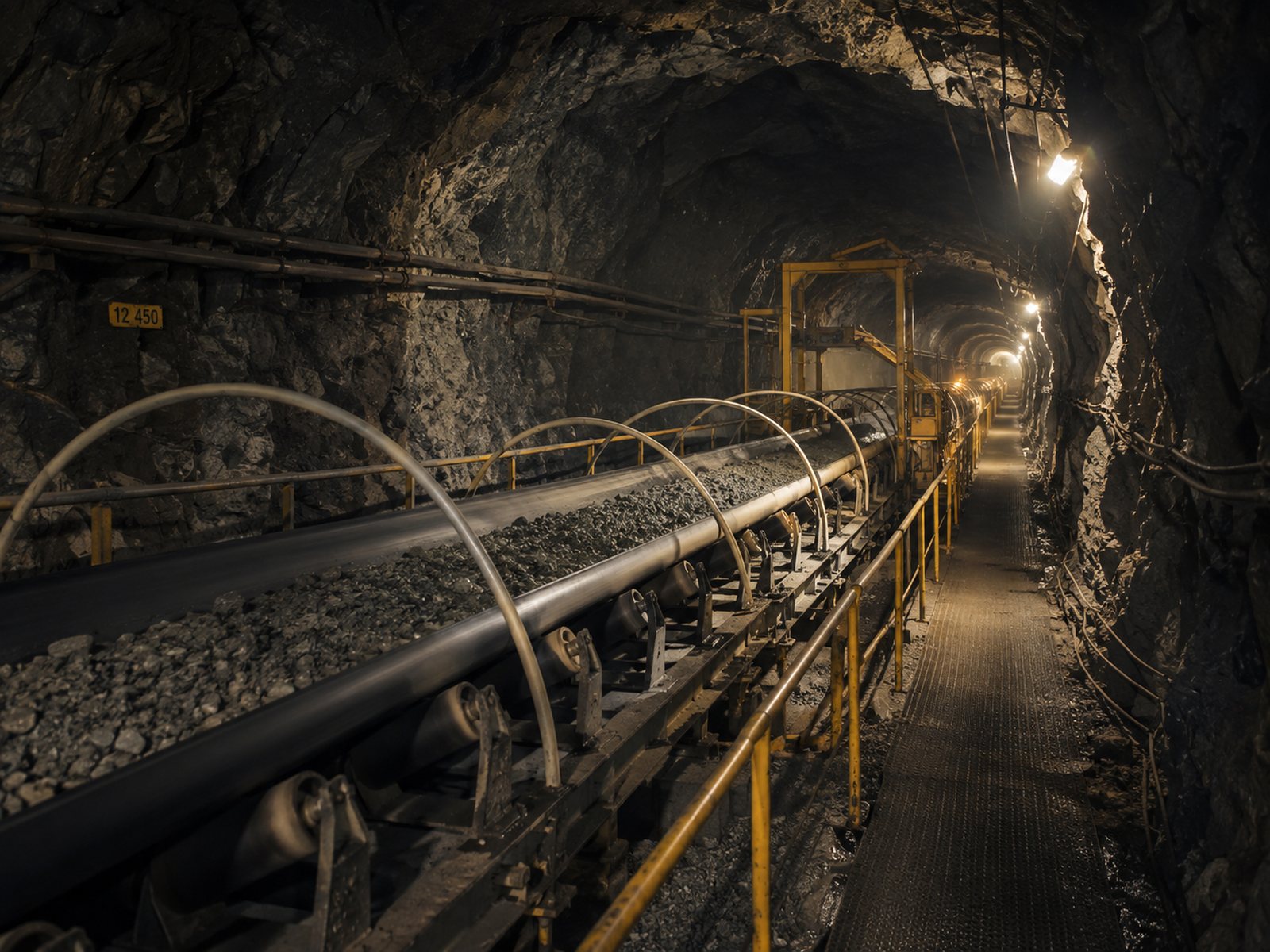
A BG5k Rip Detector installed in a Canadian underground mining operation has now remained in service for four years. The underground environment presents demanding operating conditions for conveyor monitoring equipment, making long-term reliability an important part of the application.
Underground mining operations rely on conveyors to move material through confined access ways where a belt failure is disruptive and awkward to reach. Longitudinal rip protection is part of the standard protective arrangement on this kind of installation, and the equipment providing it has to survive the same conditions as the conveyor itself.
Underground conditions are harsher than a plant or test installation. Monitoring equipment installed there is expected to keep working for years without becoming a maintenance item in its own right, so dependability over time matters as much as the detection function on the day it is commissioned.
The BG5k detects longitudinal rips by monitoring the position of each belt edge with two non-contact sensors and deriving belt width continuously while the conveyor runs. When a rip causes the belt to widen, narrow or fold beyond the operator-set window for longer than the fail delay, a HALT signal is sent to the site control system. The same sensors report lateral belt position in millimetres, so developing mistracking is visible before it causes damage. Nothing touches the belt and nothing is embedded in it.
After four years in the underground environment, the BG5k remains operational and continues to provide conveyor rip-detection capability at the site.
Conveyor monitoring equipment used underground must operate reliably in an environment very different from a clean plant or test installation. This installation provides a real-world example of the BG5k remaining in service over multiple years in a demanding mining application.
- BG5k operating underground in a Canadian mining application for four years
- Still operational and providing rip-detection capability at the site
- Non-contact belt-width monitoring — nothing touches or is embedded in the belt
- Belt tracking data reported alongside rip detection from the same sensors
- Long-term reliability in a demanding environment is the proof point of this installation
Tell us about your belt, operating environment and site requirements and we’ll recommend the appropriate BG5k configuration.
Tell Us About Your Conveyor