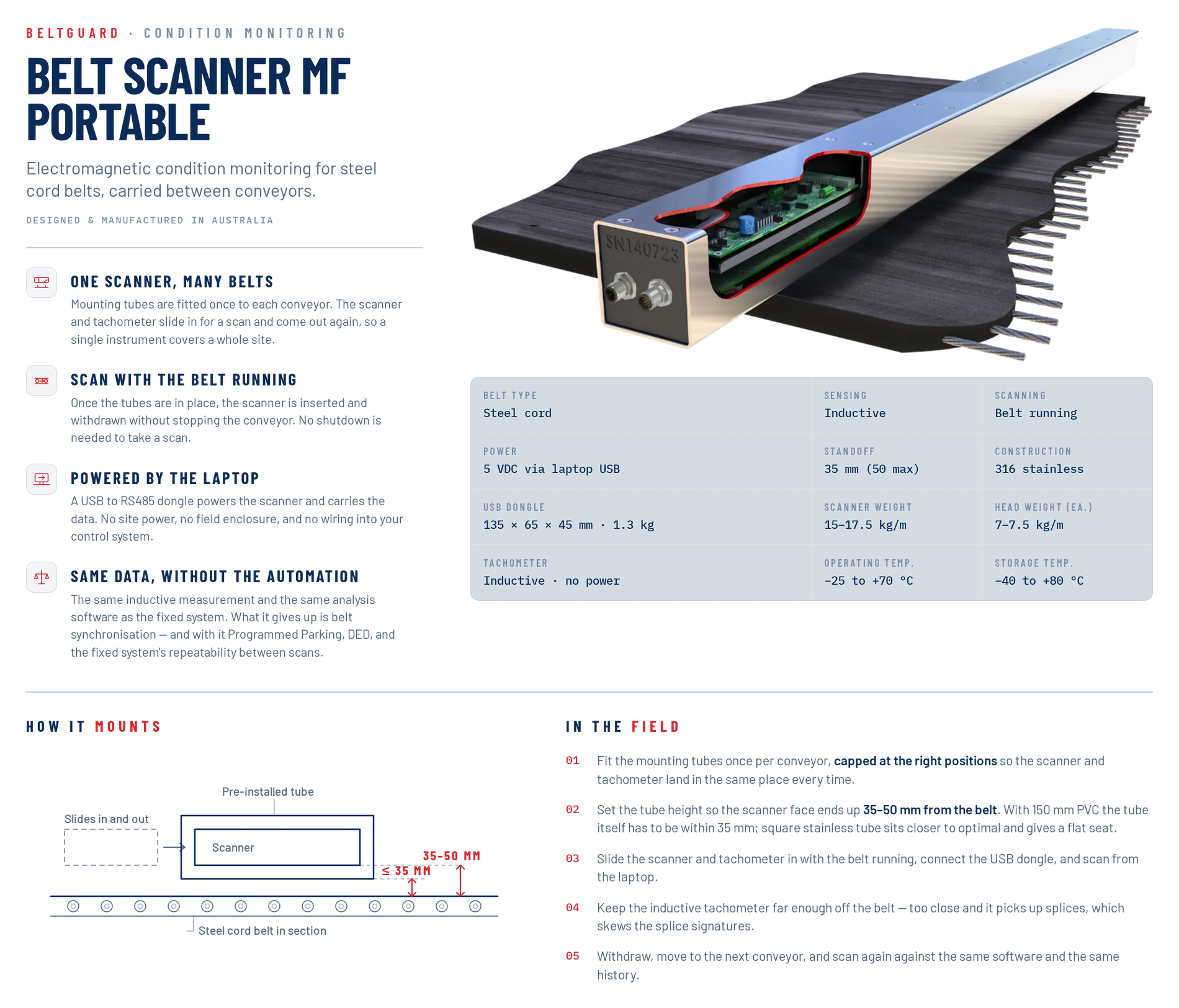
System overview — click to enlarge and read full detail.
Belt Scanner MF - Portable
Portable Condition Monitoring
The Belt Guard Belt Scanner MF - Portable brings the same electromagnetic condition monitoring as the fixed system to sites with several steel cord conveyors. Mounting tubes are fitted once to each conveyor; the scanner, conditioning heads and tachometer slide in for a scan and come out again, so one instrument covers a whole site. Scanning is done with the belt running and the scanner is powered from a laptop through a USB dongle, so no site power, field enclosure or control wiring is needed. Belt synchronisation, and with it Programmed Parking and Disastrous Event Detection, are fixed-system features.
Includes the first year of Beltscan monitoring software and online reporting.
All prices shown in USD. Indicative equipment pricing only. Final pricing may vary by belt width, configuration and destination. Freight, local taxes, installation and optional services are additional where applicable.
The full software suite — system access and configuration, offline analysis, data download and online reporting — is included with the scanner for the first year. No separate licence purchase is required.
Software renewal thereafter: US$7,900/year per monitored belt, covering the complete suite.
Is Belt Scanner MF Portable Right for You?
- Operate more than one steel cord conveyor
- Find periodic scanning sufficient for your risk profile
- Want one instrument that covers a whole site
- Want the same high-resolution scan data as the fixed system
- Prefer a lower entry cost per conveyor covered
- Have one conveyor critical enough to warrant permanent monitoring
- Need continuous rather than periodic scanning
- Need PLC integration, automated belt stop or Programmed Parking
- Want alarms raised without someone attending the belt
How Belt Scanner MF Portable Works
Prepare Each Conveyor
Permanent full-width mounting tubes are installed across each conveyor that will be monitored.
These positions allow the portable magnet bars and scanner to be repeatedly installed in the correct operating positions. The prepared structure remains in place permanently.
Install the Portable Hardware
The portable components slide into the permanent mounting tubes:
- an upper magnetic conditioning bar
- a lower magnetic conditioning bar
- the Belt Scanner inductive scanner
Scan the Belt
As the conveyor operates, the upper and lower magnet bars magnetise the steel cords. The belt then passes the downstream non-contact inductive scanner.
The scanner captures the magnetic signature across the belt. Data is collected and analysed to identify changes in cord condition.
Move to the Next Conveyor
Once the scan is complete, the portable hardware is removed from the prepared mounting tubes.
The same scanner can then be transferred to another conveyor already fitted with the permanent mounting arrangement.
At Each Prepared Conveyor
Permanently attached to the conveyor structure.
Receives the removable upper magnet bar.
Receives the removable lower magnet bar.
Receives the portable full-width inductive scanner.
Upper and lower bars, transferred between prepared conveyors.
Full-width, non-contact, positioned downstream of the magnet bars.
Travels with the scanning hardware for data capture and transfer.
What It Detects, and What It Doesn't
- Broken and deteriorating steel cords
- Change in cord condition between scanning visits
- Splice deterioration and broken lacing wires
- Corrosion within the cords
- Position and severity of detected events along the belt
- Monitor continuously or raise live alarms — See the Fixed system →
- Integrate with your PLC or stop the belt automatically
- Measure cover thickness — See CC222 →
- Provide longitudinal rip protection — See BG5k — fabric, PVC and steel cord →
- Assess fabric or PVC carcass condition
What Does Setup Involve?
| Fitted by | Site personnel with Beltscan guidance. |
| Per conveyor | Tube assemblies are fitted once to each conveyor you want to scan. The scanner itself moves between them. |
| Conveyor shutdown | Required once, to fit the tubes. Scanning afterwards is done with the belt running. |
| Belt modification | None. Nothing is embedded in, bonded to or cut into the belt. |
| Power | 5 VDC from the laptop through the USB to RS485 dongle. No site power and no field enclosure are required. |
| Laptop required | Yes. Data acquisition and analysis software is included. |
| PLC required | No. The portable system does not integrate with site control. |
| Internet required | Not to run a scan. Required for the online portal and remote reporting. |
| Commissioning | 1 day, including operator training. |
| Tube assemblies per conveyor | Tubes are fitted once for the scanner and the conditioning heads, and capped at the right positions so everything lands in the same place on every visit. |
| Tube material | 150 mm PVC pipe, or 316 stainless square tube. Square tube gives a flat seat and puts the scanner closer to the optimal standoff; PVC works but its curve costs you some of the margin. |
| Tube height | Set so the scanner face ends up 35–50 mm from the belt. With 150 mm PVC the tube itself has to sit within 35 mm of the belt surface to keep that distance. |
| Tachometer | An inductive tachometer, more sensitive than the fixed system's digital unit and drawing no power. It must not sit too close to the belt or it will pick up splices and skew the splice signatures. |
| Clearance | The conditioning heads and the tachometer each need at least 1 m of separation from the scanner, so their own fields don't reach it. |
| Control connection | None. The portable system has no relay outputs and does not wire into site control. Alarms, automated belt stop and Programmed Parking are fixed-system features. |
Your Belt Data, Online, 24/7.
Every Belt Scanner MF system comes with access to a secure online portal. Scan data is available to your team around the clock from any internet-connected device — no software to install and no waiting for someone to send you a file.
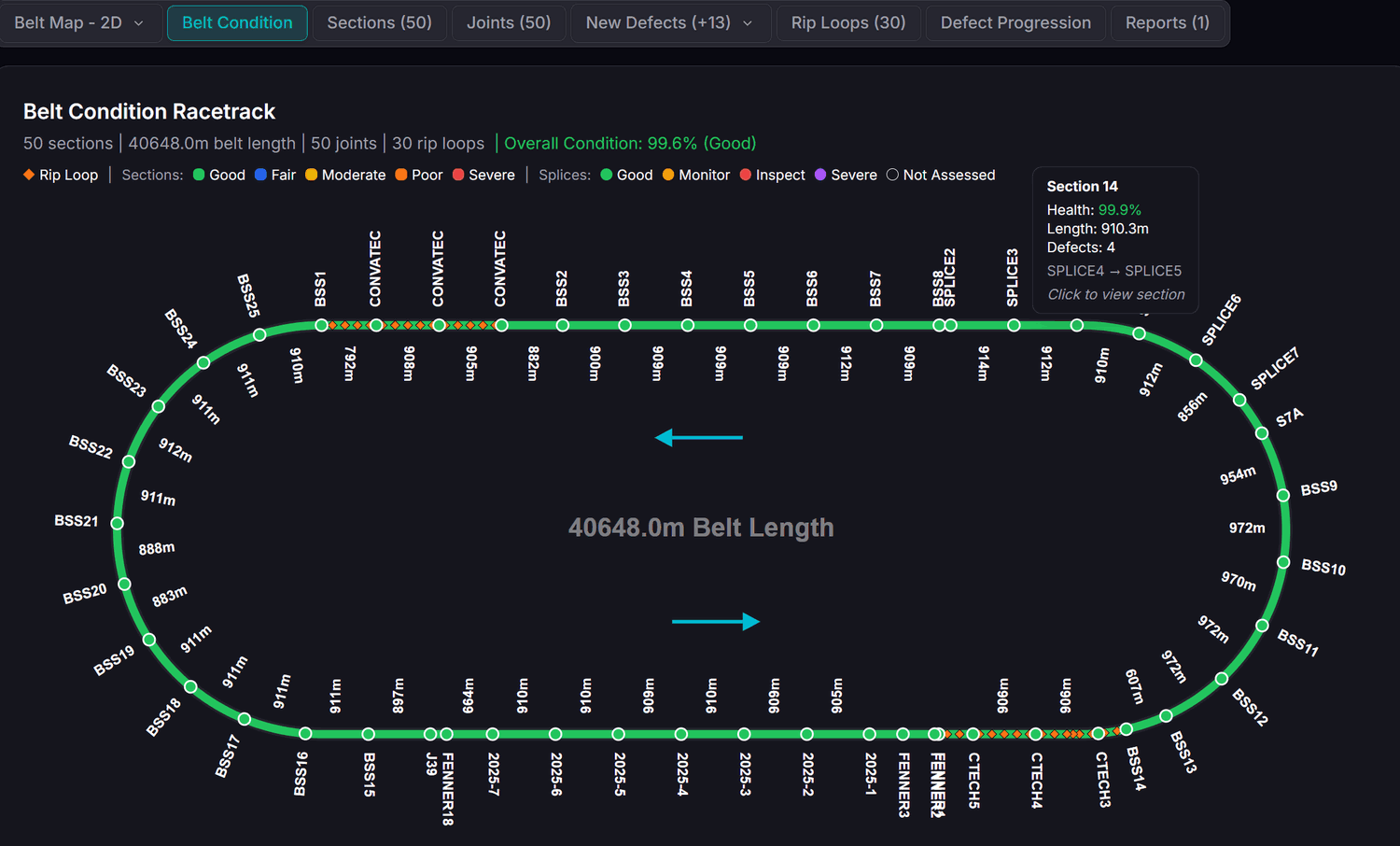 Belt condition overview
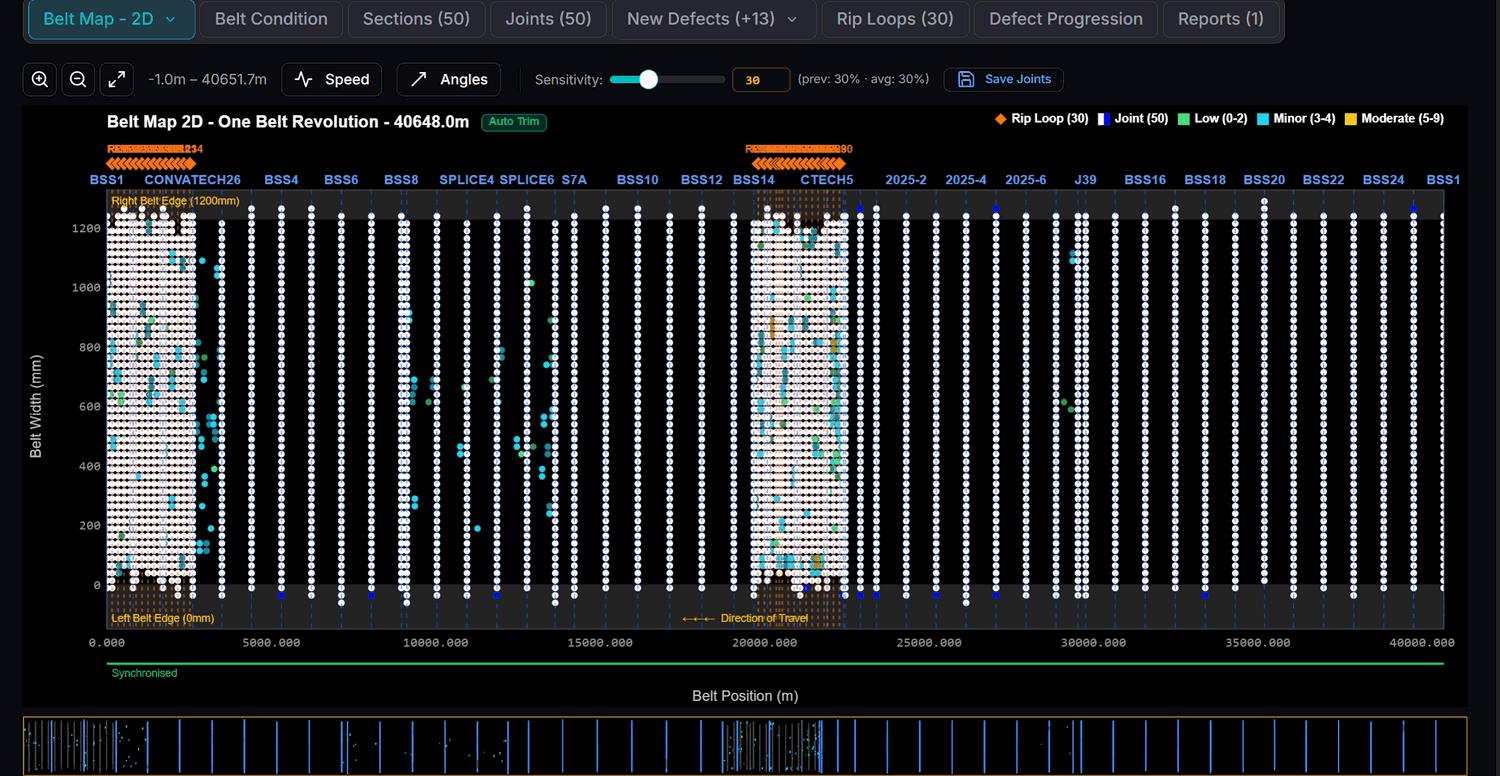 Full belt map
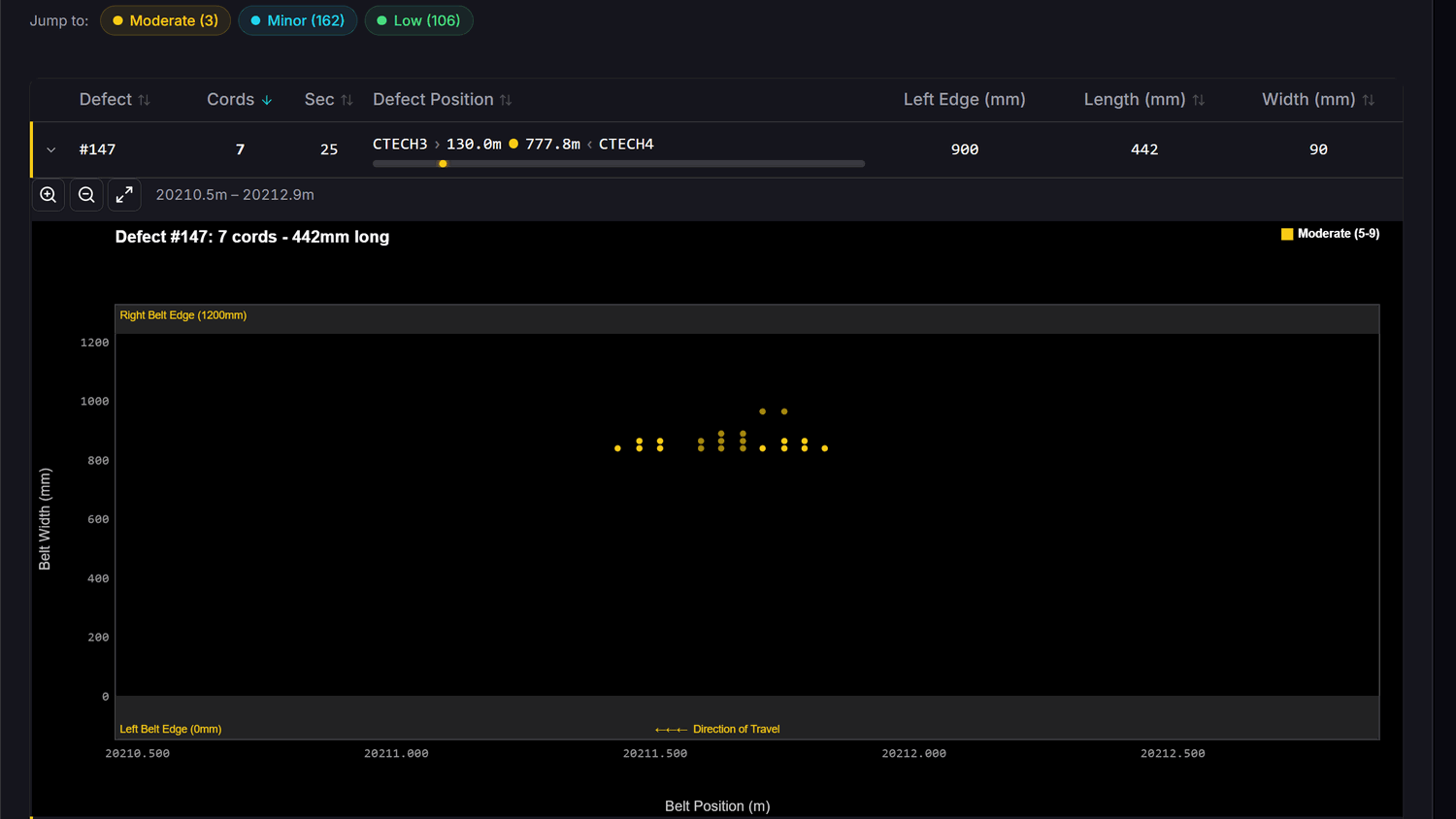 Defect detail & reporting
ApprovalBuilding the Case Internally
The engineer who wants the system is rarely the person who approves it. These are the figures an approver will ask for — worth assembling before the conversation.
Steel cord belting, freight and installation for the affected conveyor
Hours to source, transport, splice and recommission after a failure
Throughput value or contractual exposure for each hour the conveyor is down
Expedited freight, out-of-hours labour, contractor mobilisation
Periodic inspection labour and the shutdowns it requires
Spillage clean-up, structural damage, safety and environmental reporting
Beltscan does not publish return-on-investment claims. The figures above are yours — we'll help you populate the system side of them.
IT and OTData, Network and IT
| Network position | None. The scanner connects to the operator's laptop through the USB to RS485 dongle; nothing is placed on the site network. |
| Outbound traffic | Scan data is uploaded to the online portal from the laptop over HTTPS. Nothing on the conveyor communicates outward. |
| Control path | None. The portable system has no relay outputs and no connection to site control. |
| Data ownership | Scan data is yours and can be exported at any time. |
OwnershipLiving With the System
| Calibration | Sensitivity is set at commissioning and confirmed against the scanner's live display. The procedure is in the operator's manual. |
| Belt replacement | A new baseline scan is established for the new belt or splice, and trending continues from that baseline. |
| Maintenance | Visual inspection of the tubes and mounts on a regular basis, and a light hose down to keep the system free of product build-up. |
ProcurementFor Your Procurement Team
| Supplier | Beltscan Systems Pty Ltd, ACN 614 321 309, PO Box 10457, Southport QLD 4215, Australia |
| Pricing currency | USD, indicative |
| Scanner construction | 316 stainless steel, 80 × 80 mm section, 15–17.5 kg per metre. Length varies with belt width. |
| Conditioning heads | 316 stainless steel, 40 × 40 mm section, 7–7.5 kg per metre each. |
| USB dongle | ABS plastic, 135 × 65 × 45 mm, 1.3 kg. Cables unplug for transport. |
| Operating temperature | −25 to +70 °C, 5–95% RH |
| Storage temperature | −40 to +80 °C, 5–95% RH |
Track RecordProven in Conveyor Operations Worldwide
Belt Scanner technology has been installed on conveyors across Australia, Asia, Europe, North America and South America, in mining, alumina, steel, coal and bulk materials handling operations.
Customer names withheld. Reference sites can be discussed under NDA. Read the Western Australia alumina case study →
Frequently Asked Questions
This page covers what the system does. The underlying detection principle is explained in more depth in our technical article, and full technical detail is available in the product documentation.
Also in Belt Guard Range
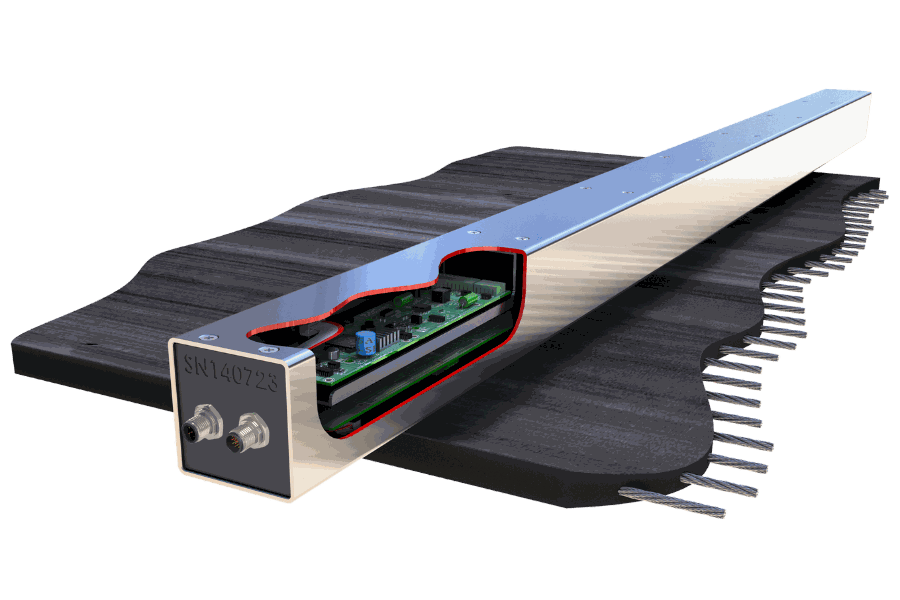
Permanently installed electromagnetic condition monitoring for steel cord belts, with optional automatic belt stop.
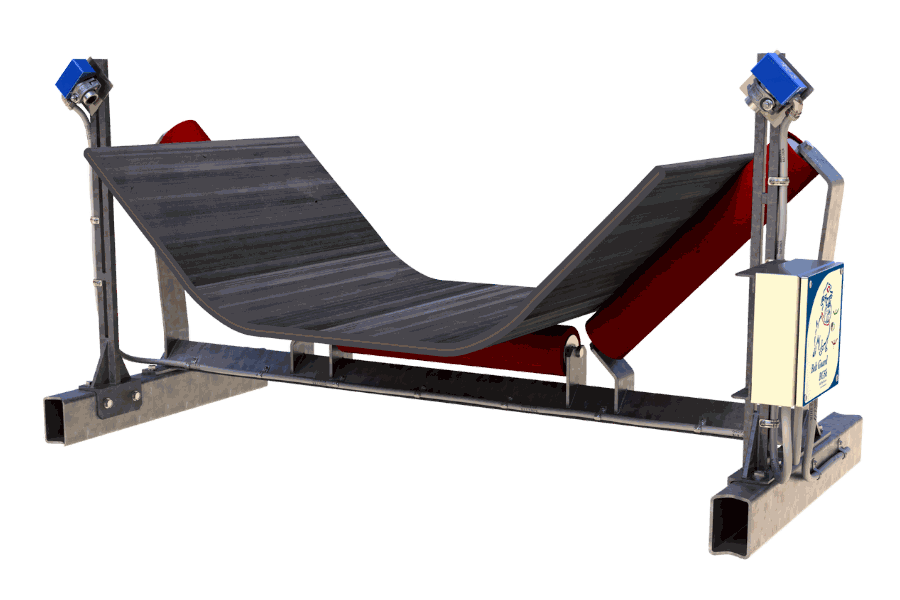
Longitudinal rip detection for fabric, PVC and steel cord belts, from continuous belt width monitoring.
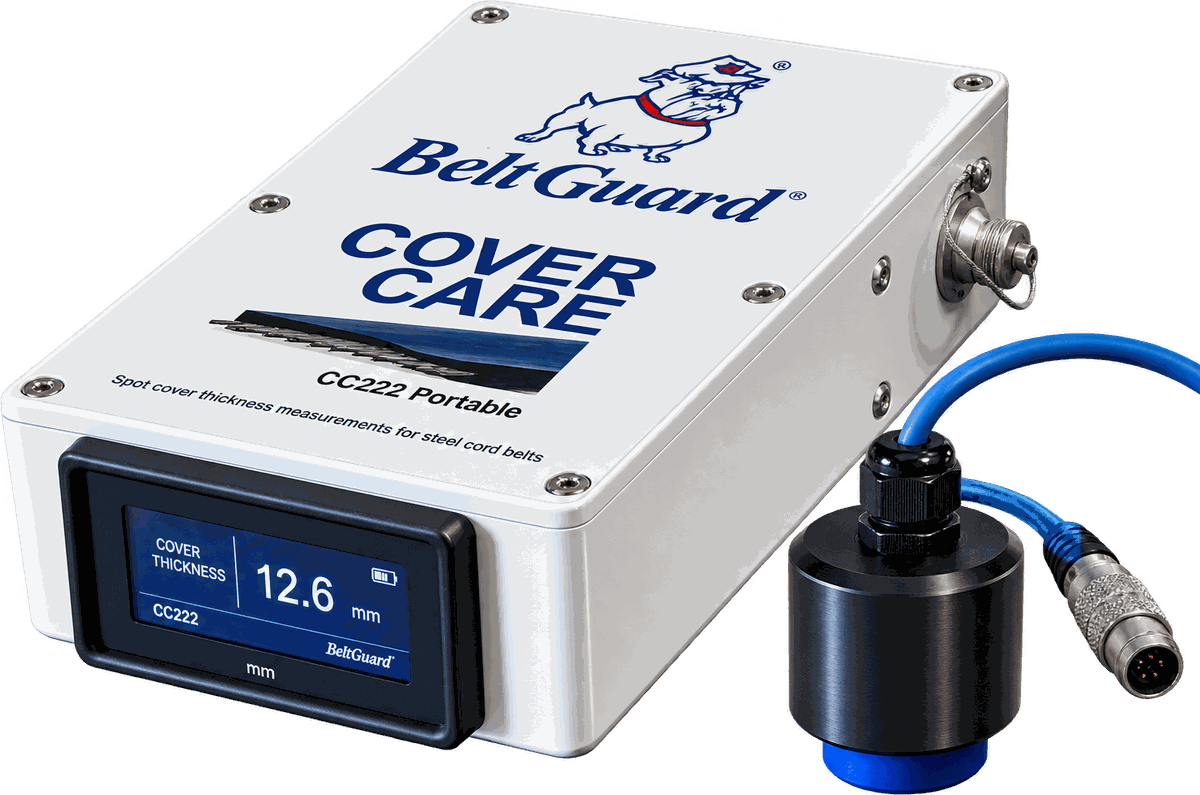
Handheld contact instrument for measuring remaining belt cover thickness. No coupling medium required.
Price It for Your Conveyor
Tell us how many conveyors you want prepared and we’ll price the mounting infrastructure and the portable scanning hardware separately, so you can see exactly what scales with each additional belt.