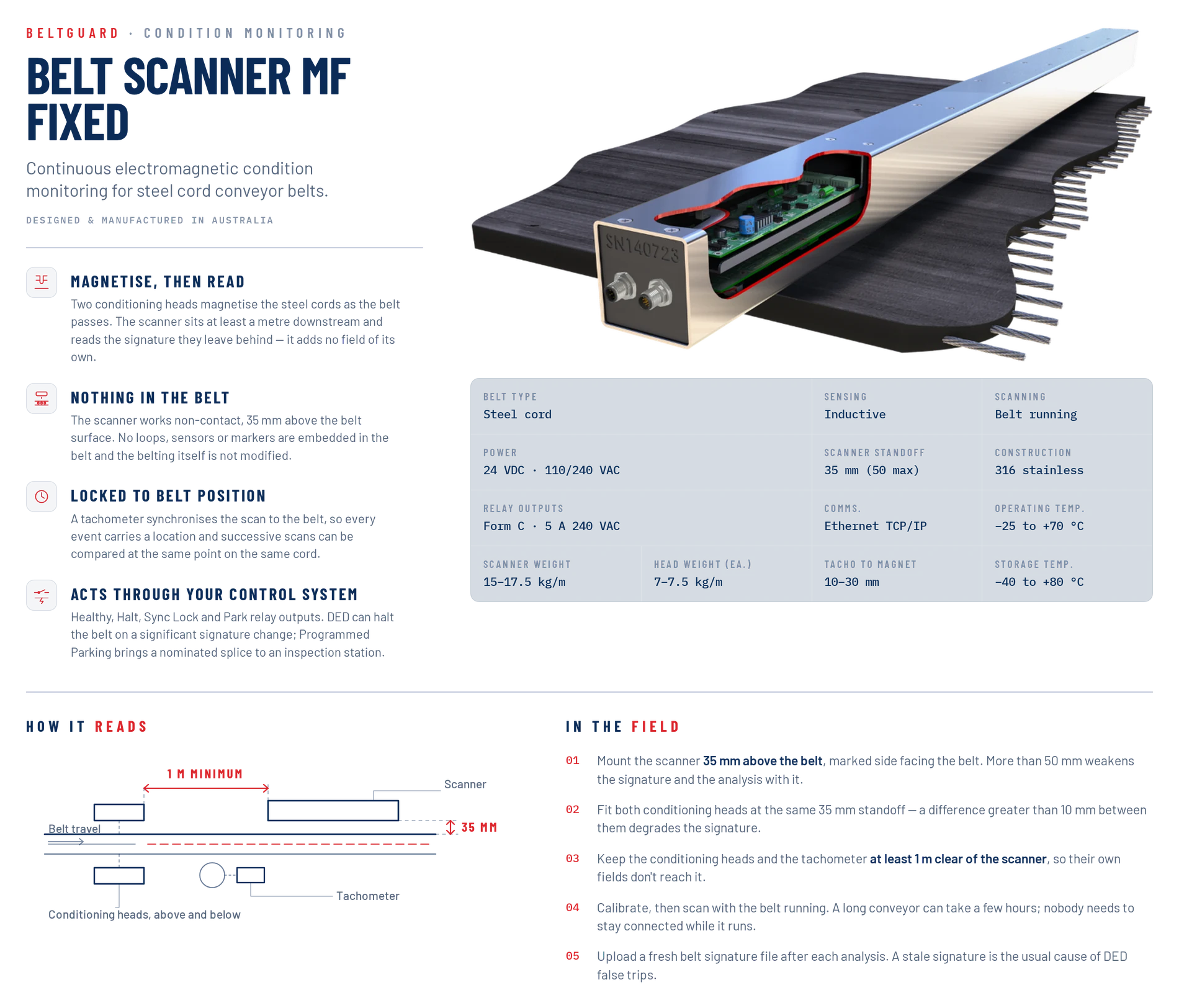
System overview — click to enlarge and read full detail.
Belt Scanner MF - Fixed
Fixed Condition Monitoring
Electromagnetic condition monitoring system for detecting cord damage in steel cord conveyors. High-resolution condition monitoring system installed 35mm from the belt surface. Features Disastrous Event Detection (DED) for automated belt stop when cord/damage thresholds are violated, and Programmed Parking to automatically park areas of interest at specific maintenance locations. Non-contact, belt brand independent, remotely monitored.
Includes the first year of Beltscan monitoring software and online reporting.
All prices shown in USD. Indicative equipment pricing only. Final pricing may vary by belt width, configuration and destination. Freight, local taxes, installation and optional services are additional where applicable.
The full software suite — system access and configuration, offline analysis, data download and online reporting — is included with the scanner for the first year. No separate licence purchase is required.
Software renewal thereafter: US$7,900/year per monitored belt, covering the complete suite.
Is Belt Scanner MF Fixed Right for Your Conveyor?
- Operate steel cord conveyor belts
- Run a conveyor critical enough to justify permanent monitoring
- Want cord and splice deterioration identified before failure
- Want continuous monitoring rather than periodic inspection
- Want alarms and automated response integrated with your PLC
- Have several steel cord conveyors to cover
- Find periodic scanning sufficient
- Don't need PLC integration or automated belt stopping
- Want one scanner that moves between belts
How Belt Scanner MF Fixed Works
Magnetise the Steel Cords
Two permanent magnet conditioning bars are installed across the conveyor, one above and one below the belt.
As the belt passes between them, the steel cords inside the belt are magnetised.
Read the Magnetic Signature
A full-width, non-contact inductive scanner is positioned downstream of the magnet bars.
As the belt passes, the sensor array measures the magnetic signature generated by the steel cords across the belt width. The scanner does not rely on ultrasonic measurement.
Compare Belt Condition
The system builds a magnetic signature profile of the belt. Over repeated revolutions, current scan data is compared with previous passes to identify changes in steel cord condition. These may indicate:
- broken wires
- cord damage
- corrosion
- splice deterioration
- developing steel cord anomalies
Monitor & Act
Detected anomalies are reported through the Belt Scanner monitoring software.
Where configured, Disastrous Event Detection (DED) can automatically trigger a conveyor stop. Programmed Parking can position a nominated section of belt at a designated maintenance location.
What Gets Installed
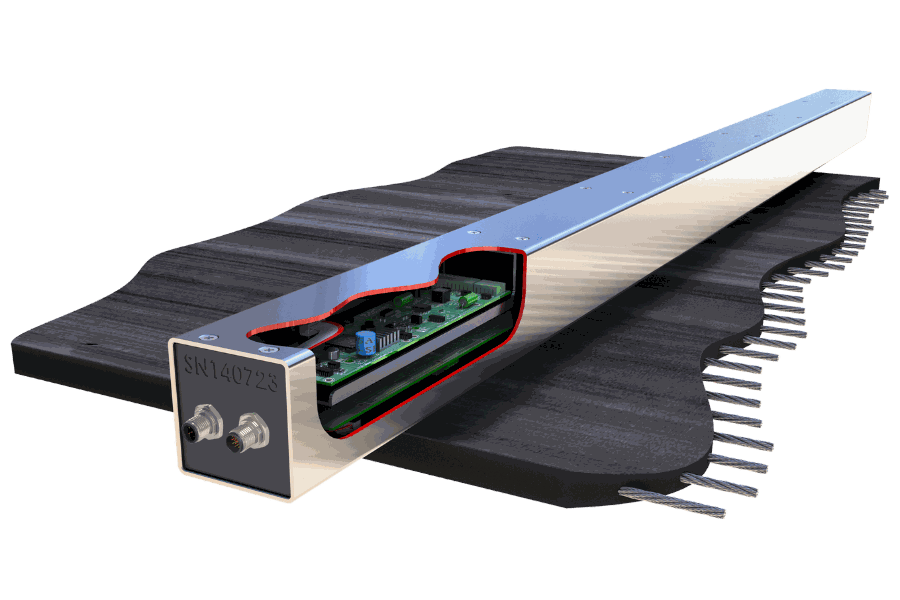
316 stainless, 40 × 40 mm section. One above and one below the belt, both at 35 mm standoff, magnetising the steel cords as the belt passes.
316 stainless, 80 × 80 mm section. Mounted non-contact 35 mm above the belt, at least 1 m downstream of the conditioning heads.
Mounted to an idler roller mount within 10–30 mm of the magnet. Synchronises the scan to belt position.
Field enclosure near the scanner, main enclosure typically in a nearby substation, housing the electronics and relay outputs.
Healthy, Halt, Sync Lock and Park, on Form C changeover contacts rated 5 A 240 VAC, wired to site control.
What It Detects, and What It Doesn't
- Broken and deteriorating steel cords
- Change in cord condition over successive scans
- Splice deterioration and broken lacing wires
- Corrosion within the cords
- Developing carcass anomalies around the cords
- Position and severity of detected events along the belt
- Measure cover thickness — See CC222 →
- Assess fabric or PVC carcass condition
- Provide longitudinal rip protection — See BG5k — fabric, PVC and steel cord →
- Replace visual inspection of the belt surface
What Does Installation Involve?
| Installed by | Site personnel with Beltscan guidance. Beltscan-arranged installation available on request. |
| Conveyor shutdown | Required for mechanical installation of the magnet bars and scanner frame. |
| Installation time | Typically 1–2 days including commissioning. |
| Belt modification | None. Nothing is embedded in, bonded to or cut into the belt. |
| Permanent fixtures | Magnetic conditioning bars and scanner frame remain in place. |
| PLC required | Required for alarm integration, automated belt stop and Programmed Parking. The system runs without one for monitoring and reporting only. |
| Laptop required | Yes, for configuration and offline analysis. |
| Control connection | Form C changeover relay outputs rated 5 A 240 VAC: Healthy, Halt, Sync Lock and Park. Configuration and data are over Ethernet TCP/IP. |
| Internet required | Not for local operation. Required for the online portal and remote support and reporting. |
| Commissioning | On site or remote. On site is typical for a first installation. |
| Training | Included with commissioning. |
| What power is required? | 24 VDC, 110 VAC or 240 VAC for a fixed system. |
| Scanner position | Bolted to Unistrut on two mounting brackets, marked side facing the belt, 35 mm from the belt surface. Beyond 50 mm the magnetic signature weakens and the analysis degrades with it. |
| Conditioning head position | Both heads at the same 35 mm standoff. A difference of more than 10 mm between them degrades the signature. |
| Clearance | The conditioning heads and the tachometer must each be at least 1 m from the scanner, so their own fields don't reach it. |
| Tachometer | Mounted to an idler roller mount, within 10–30 mm of its target magnet. The mount design is site-specific and is the customer's responsibility. Standard magnets are 20 × 3 mm discs. |
Your Belt Data, Online, 24/7.
Every Belt Scanner MF system comes with access to a secure online portal. Scan data is available to your team around the clock from any internet-connected device — no software to install and no waiting for someone to send you a file.
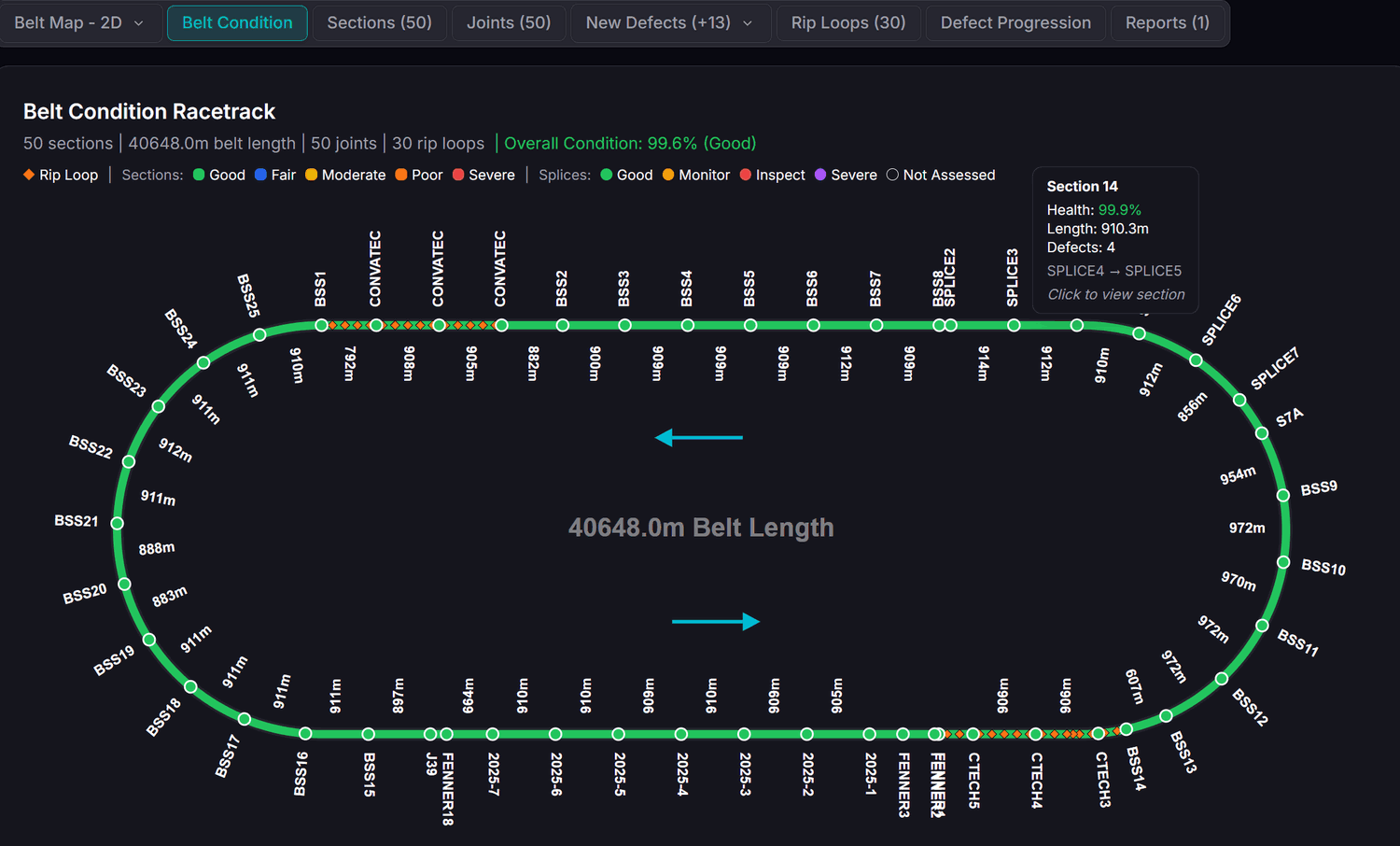 Belt condition overview
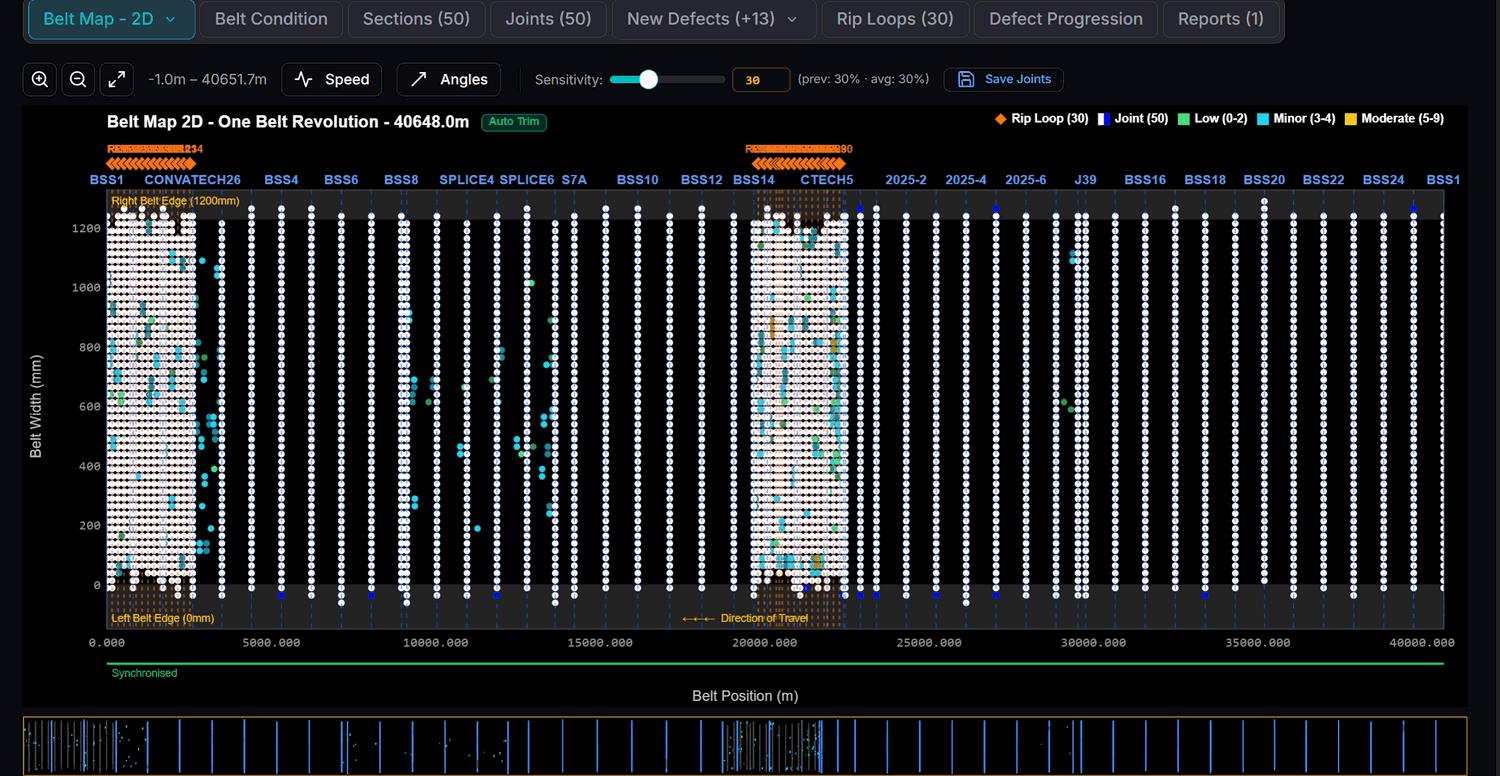 Full belt map
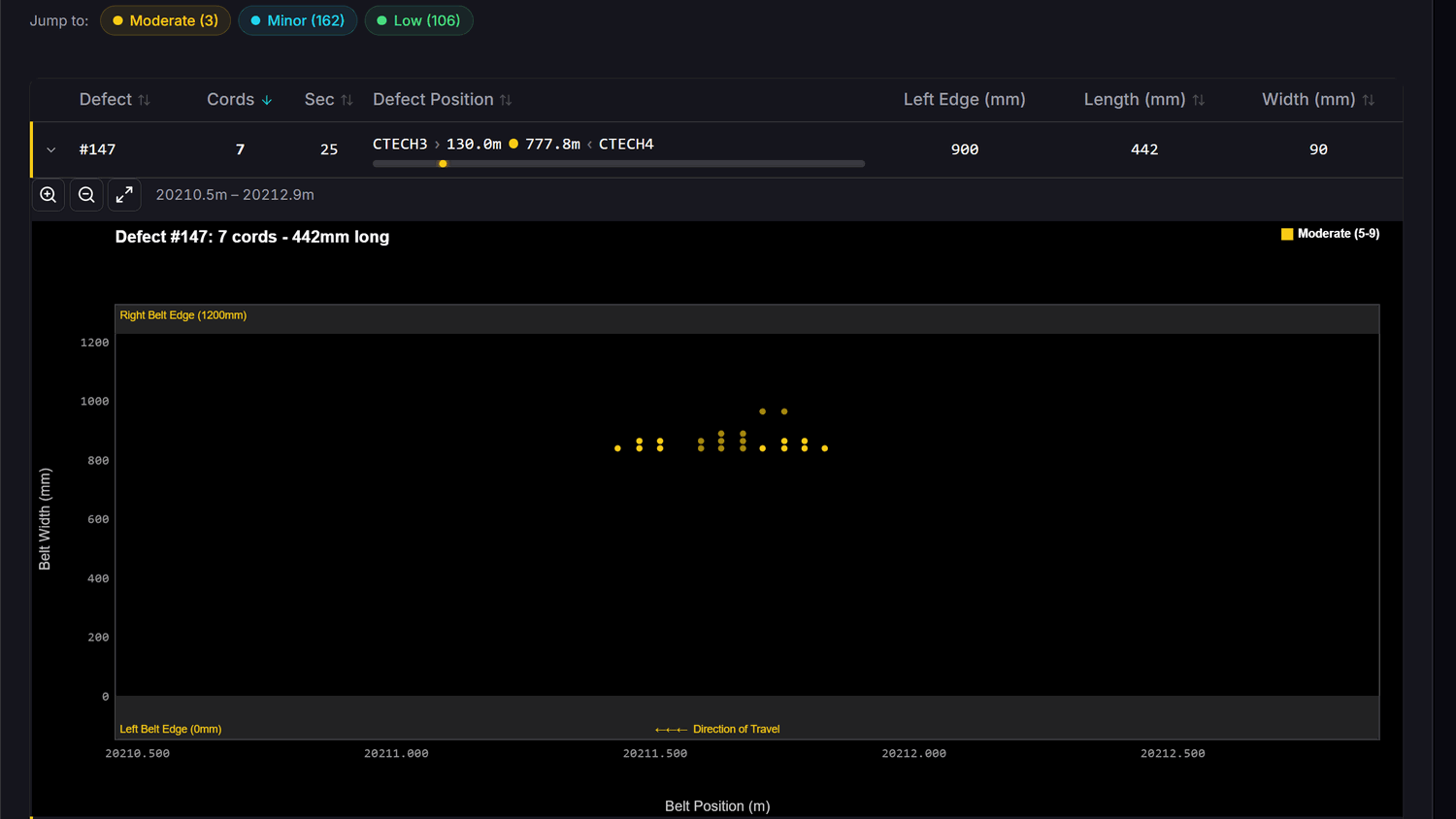 Defect detail & reporting
ApprovalBuilding the Case Internally
The engineer who wants the system is rarely the person who approves it. These are the figures an approver will ask for — worth assembling before the conversation.
Steel cord belting, freight and installation for the affected conveyor
Hours to source, transport, splice and recommission after a failure
Throughput value or contractual exposure for each hour the conveyor is down
Expedited freight, out-of-hours labour, contractor mobilisation
Periodic inspection labour and the shutdowns it requires
Spillage clean-up, structural damage, safety and environmental reporting
Beltscan does not publish return-on-investment claims. The figures above are yours — we'll help you populate the system side of them.
IT and OTData, Network and IT
| Network position | Control hardware sits on the site network and communicates with the PLC over Modbus TCP. |
| Outbound traffic | Nothing leaves site for local operation. Portal and remote reporting use an outbound HTTPS connection only. |
| Control path | Only the alarm and stop signals you configure at the PLC. The portal has no control path to site equipment. |
| Data ownership | Scan data is yours and can be exported at any time. |
OwnershipLiving With the System
| Calibration | Sensitivity is calibrated at commissioning and checked against the live display. The procedure is in the operator's manual and is normally done with Beltscan support. |
| Belt replacement | A new baseline scan is established for the new belt or splice, and trending continues from that baseline. |
| Communications loss | The system continues scanning and logging locally. Data is available once the connection is restored. |
| Maintenance | Visual inspection on a regular basis to confirm all mounts are secure, and a light hose down to keep the system free of product build-up. |
| Belt signature file | A fresh belt signature file should be generated and uploaded after each analysis. A stale signature is the usual cause of DED false trips. |
ProcurementFor Your Procurement Team
| Supplier | Beltscan Systems Pty Ltd, ACN 614 321 309, PO Box 10457, Southport QLD 4215, Australia |
| Pricing currency | USD, indicative |
| Scanner construction | 316 stainless steel, 80 × 80 mm section. Length varies with belt width. |
| Conditioning heads | 316 stainless steel, 40 × 40 mm section, one above and one below the belt. |
| Weight | Scanner 15–17.5 kg per metre. Conditioning heads 7–7.5 kg per metre each. |
| Operating temperature | −25 to +70 °C, 5–95% RH |
| Storage temperature | −40 to +80 °C, 5–95% RH |
Track RecordProven in Conveyor Operations Worldwide
Belt Scanner technology has been installed on conveyors across Australia, Asia, Europe, North America and South America, in mining, alumina, steel, coal and bulk materials handling operations.
Customer names withheld. Reference sites can be discussed under NDA. Read the Western Australia alumina case study →
Frequently Asked Questions
This page covers what the system does. The underlying detection principle is explained in more depth in our technical article, and full technical detail is available in the product documentation.
Also in Belt Guard Range
Portable electromagnetic scanner for multi-conveyor steel cord monitoring via slide-in tube assemblies.
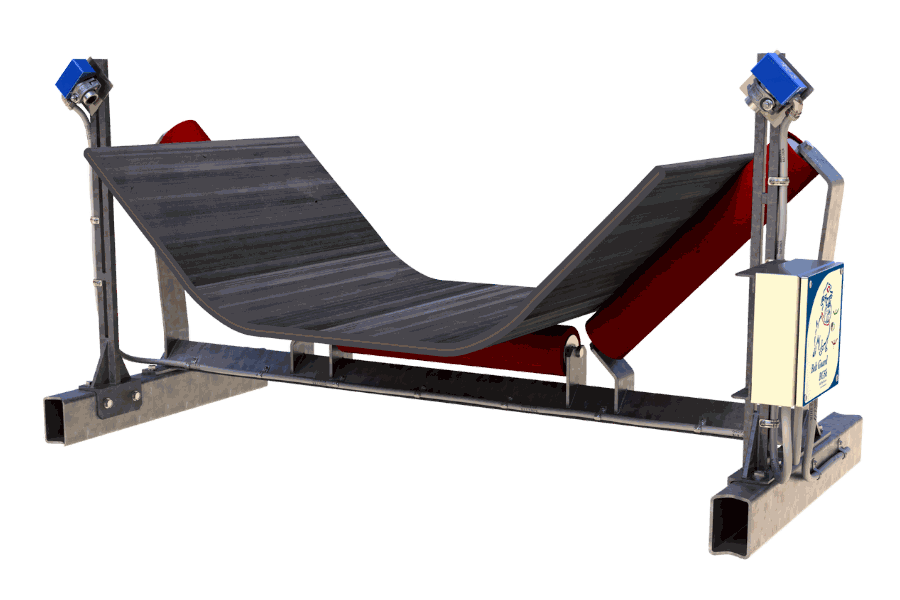
Longitudinal rip detection for fabric, PVC and steel cord belts, from continuous belt width monitoring.
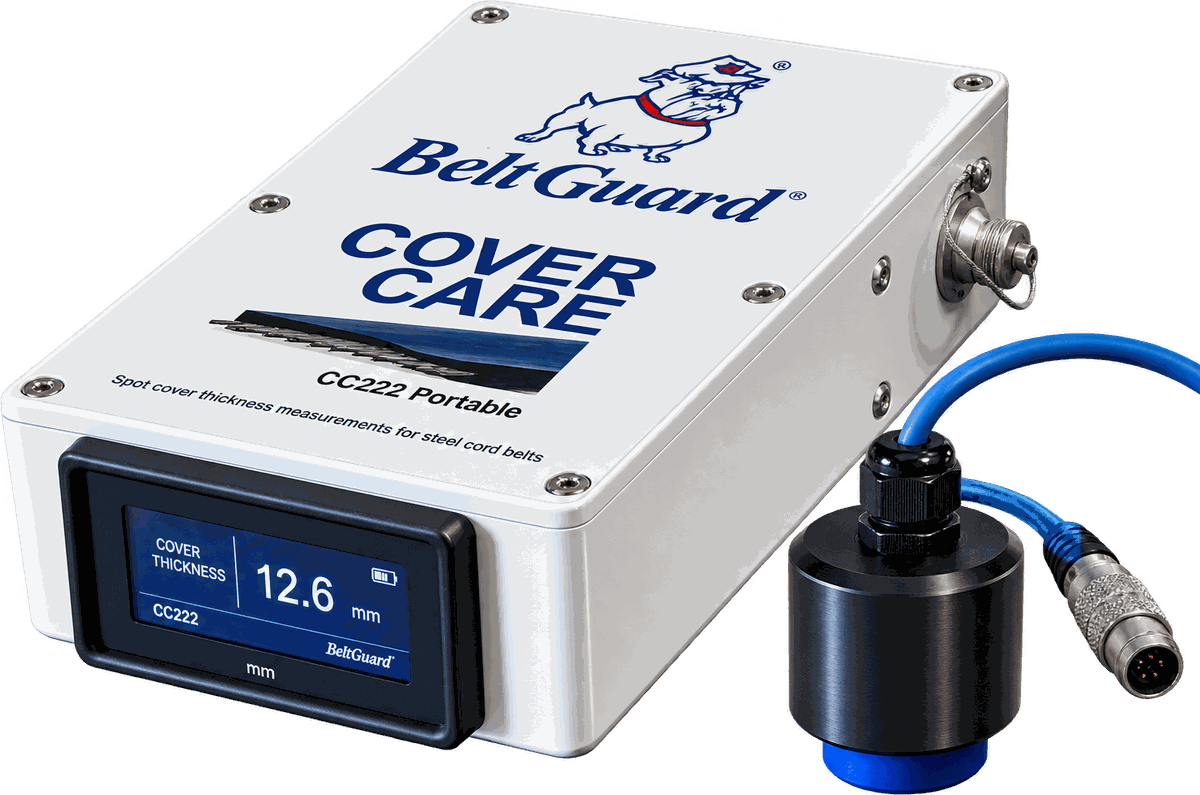
Handheld contact instrument for measuring remaining belt cover thickness. No coupling medium required.
Price It for Your Conveyor
Tell us your belt width, site and the services you need. We’ll configure the system and price it for your conveyor — or connect you with your local agent.